Birdwatching in Bukit Lawang and Gunung Leuser: spot Rhinoceros Hornbills, trogons, broadbills & kingfishers. Best birding trails, seasons & binoculars.
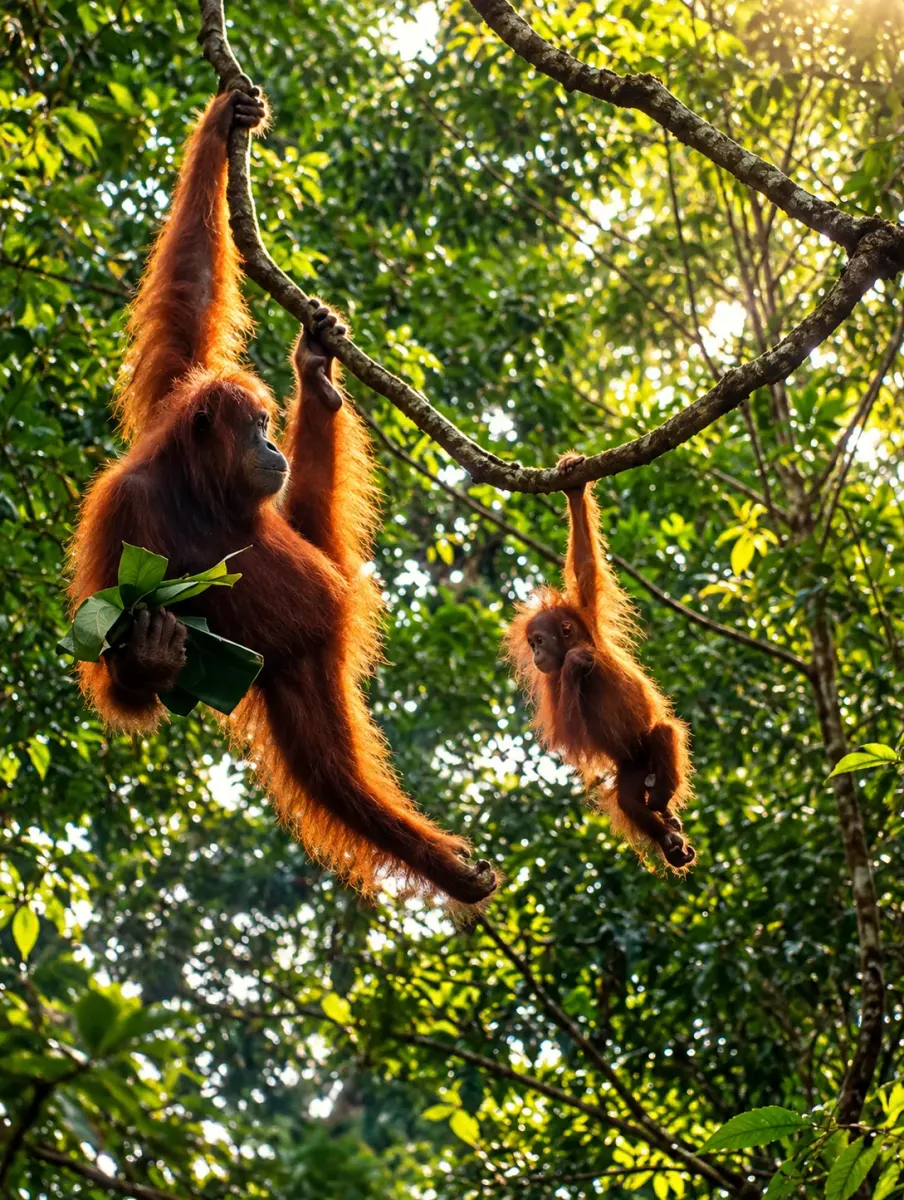
While primate enthusiasts flock to Bukit Lawang to observe wild Sumatran orangutans and listen to dawn gibbon choruses, birders and wildlife photographers know Gunung Leuser National Park as an avian biodiversity hotspot. Home to over 380 recorded bird species, the Bohorok valley and Landak River corridors shelter some of Southeast Asia’s most iconic canopy aviators.
Among them, none capture the imagination quite like the hornbills (family Bucerotidae). Flying overhead with wingbeats that sound like a rhythmic steam locomotive, these majestic "farmers of the forest" disperse large canopy tree seeds that regenerate the tropical rainforest. This comprehensive field guide covers the 8 hornbill species of Gunung Leuser, other iconic Leuser forest birds, optimal birding seasons, essential optics gear, and top observation trails around Bukit Lawang.
1. The 8 Hornbill Species of Gunung Leuser National Park
North Sumatra supports eight distinct hornbill species, ranging from massive canopy fruit-eaters to specialized understory hunters. Here is the field identification breakdown:
| Species | Local Name & Status | Key ID Marks & Call | Habitat in Bukit Lawang |
|---|---|---|---|
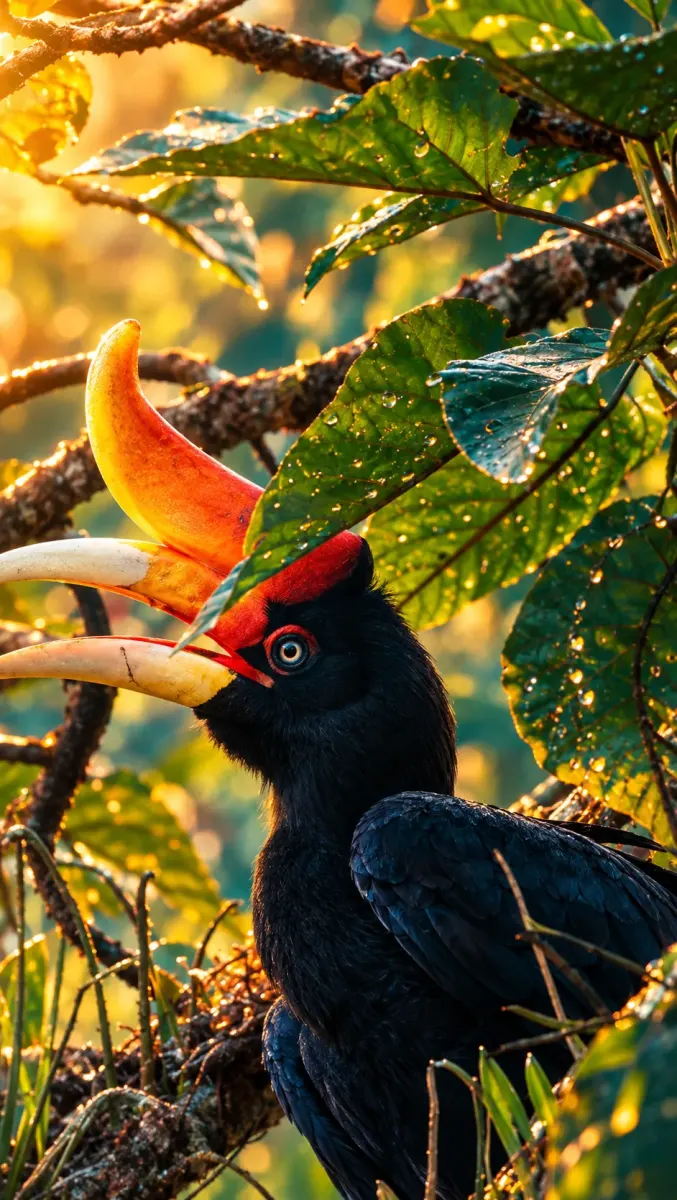
| Rhinoceros Hornbill (Buceros rhinoceros) |
Rangkong Badak Vulnerable (VU) |
Massive upward-curving golden-orange casque; white tail with broad black band; deep resonant "Rrok-rrok!" barking call | Emergent dipterocarps (>35m) along Bohorok and Landak ridges; heard flying daily at dawn |
| Great Hornbill (Buceros bicornis) |
Enggang Papan Vulnerable (VU) |
Largest hornbill (up to 1.3m); massive yellow concave casque; broad yellow-and-black wing bar | Primary rainforest valleys; often pairs traveling between large fruiting fig trees |
| Helmeted Hornbill (Rhinoplax vigil) |
Rangkong Gading Critically Endangered (CR) |
Solid keratin "red ivory" casque; long central tail feathers; unmistakable accelerating laughing call ending in manic cackling | Deep primary core zones on multi-day treks (3D2N & 4D3N expeditions); heavily protected |
| Bushy-Crested Hornbill (Anorrhinus galeritus) |
Enggang Klihingan Near Threatened |
Smallest Leuser hornbill; brownish-grey plumage; shrill high-pitched communal squawking like a pack of excited puppies | Noisy social flocks of 4 to 12 birds flying through mid-canopy fruit trees and river bends |
| White-Crowned Hornbill (Berenicornis comatus) |
Enggang Jambul Endangered (EN) |
Striking upright white spiky crest; white neck, breast, and tail; carnivorous hunter of lizards and snakelets | Dense sub-canopy and river gullies; shy and stays concealed within foliage |
| Wreathed Hornbill (Rhyticeros undulatus) |
Julang Emas Vulnerable (VU) |
Bright yellow inflatable throat pouch in males (blue in females); distinct corrugated ridges across base of beak | Flies long distances over river canyons in morning and dusk; high-altitude canopy |
| Black Hornbill (Anthracoceros malayanus) |
Kangkareng Hitam Vulnerable (VU) |
Glossy black body with white tail tips; large pale yellowish casque in males, black in females | Secondary forest borders and riverbanks; often perches on dead emergent trees |
| Oriental Pied Hornbill (Anthracoceros albirostris) |
Kangkareng Perut-Putih Least Concern |
Black with clean white belly; pale ivory casque with black patch; sharp laughing cackle | Most common hornbill in village buffer zones, agroforestry rubber gardens, and hotel riverbanks |
2. Other Iconic Forest Birds to Spot in Gunung Leuser
Beyond hornbills, birders exploring the Bohorok valley and peripheral buffer zones can encounter a dazzling array of rainforest specialists:
- Kingfishers Along River Corridors: Look along shaded rock alcoves of the Bohorok and Landak rivers for the brilliant electric-blue Blue-Banded Kingfisher (Alcedo euryzona), the secretive Rufous-Collared Kingfisher, and the common Stork-Billed Kingfisher diving for river minnows.
- Broadbills & Trogons: The sub-canopy is graced by the jewel-colored Black-and-Yellow Broadbill (Eurylaimus ochromalus) with its vivid pink wash and frog-like trilling call, as well as the Red-Headed Trogon (Harpactes erythrocephalus) perching motionless on mid-story lianas.
- The Spectacular Great Argus Pheasant (Argusianus argus): Known locally as Kuau Raja, male Argus pheasants clear 5-meter circular dancing arenas on forest ridge floors. Their explosive two-note ringing territorial call—"Kwow-wow!"—echoes across valleys for over a kilometer during breeding season.
- Pittas & Babblers in the Leaf Litter: Patient watchers sitting quietly near limestone gullies may spot the terrestrial Schneider’s Pitta (high-altitude Leuser endemic) or the iridescent Malayan Banded Pitta hopping across mossy roots.
3. Top 4 Birdwatching Trails Around Bukit Lawang
- Batu Kapal & Landak River Valley Trail: The gentle trail following the Landak River through mixed rubber agroforestry toward Batu Kapal offers wide open canopy views. Rhinoceros Hornbills, Oriental Pied Hornbills, and Dollarbirds frequently feed in giant riverbank fig trees.
- Bukit Lawang Suspension Bridges at Sunrise (06:15 – 07:30 WIB): Standing on the middle of the Bohorok suspension bridges at first light gives you a 360-degree vantage over the river gorge. Flocks of Bushy-Crested Hornbills, Pacific Swallows, and Blue-Winged Leafbirds fly downriver from their roosts.
- Landak Ridge on the 2D1N Overnight Trek: Ascending the first and second ridges into primary dipterocarp forest on a 2D1N Jungle Camp Trek brings you level with mid-story tree crowns where trogons, broadbills, and woodpeckers forage.
- Bat Cave (Gua Kampret) Karst Forest Loop: The limestone forest surrounding the Bat Cave is excellent for spotting Cave Swiftlets, Orange-Bellied Flowerpeckers, and Chestnut-Breasted Malkohas.
4. Best Birding Seasons & Essential Optics Advice
- Best Season (May to September): While birding is productive year-round, the relatively drier months correspond with the major fruiting season of canopy figs and dipterocarp mast seeding (Weather & Season Guide), concentrating hundreds of avian frugivores around active fruit trees.
- Binoculars (8x42 or 10x42 Waterproof): Because the rainforest canopy is shaded and dark beneath 40-meter trees, choose binoculars with high light transmission (at least a 42mm objective lens diameter) and nitrogen-purged waterproofing to resist 85%–90% ambient humidity.
- Camera Lenses & Silica Gel: A telephoto lens of 400mm to 600mm is ideal for canopy birds. Always store camera lenses inside a sealed dry bag with rechargeable silica gel packets when resting at your lodge (Rainforest Photography Guide).
- Audio Playback Ethics: Never use loud recorded bird call playback (pishing apps) during nesting season, as it disrupts breeding pairs and distracts birds from feeding their chicks.

Explore Bukit Lawang Team
HPI Member Guides, Wildlife Naturalists & Conservation CollectiveThe editorial and expedition team of Explore Bukit Lawang — local HPI member guides, primate trackers, river captains and conservation educators born along the Bohorok River.
Ready to Trek with Our Local HPI Guides?
National park permits, small private groups, and traditional river tubing included on every expedition.