Month-by-month weather guide for Bukit Lawang: dry season vs wild durian fruit months, daily 07:00-14:00 dry trekking windows & Bohorok river clarity.
Located just 3.55° north of the Equator on the eastern slopes of the Barisan Mountain range, Bukit Lawang and Gunung Leuser National Park (TNGL) experience a true equatorial rainforest climate. Unlike monsoon destinations that shut down for half the year, Bukit Lawang is an active, rewarding 365-day-a-year wildlife destination—provided you understand how daily rainfall rhythms, canopy fruiting cycles, and river levels shape your trek.
Whether your priority is hiking across dry, firm clay ridges, swimming in crystal-clear turquoise pools at the Landak River, photographing wild orangutans during the aromatic wild durian harvest, or riding fast whitewater rapids on a River Tube Raft, this month-by-month field guide breaks down exactly what to expect. You can also test your travel dates interactively using our 12-Month Best Time to Visit & Fruit Season Radar.
1. The Golden Rule of Sumatra’s Rainforest: Why Morning Departures Matter
The biggest misconception among first-time visitors is checking a generic smartphone weather app, seeing a "rain cloud icon" every day, and assuming it rains non-stop. Because Gunung Leuser is a dense tropical rainforest generating its own microclimate through evapotranspiration, almost every month of the year records some afternoon moisture—yet day-long persistent rain is rare.
Instead, the Bohorok valley follows a remarkably consistent three-phase daily meteorological rhythm:
- 07:00 – 13:30 (The Prime Dry Window): Mornings begin with cool mountain mist lifting off the Bohorok River, followed by bright equatorial sunshine and clear blue skies. Wild orangutans leave their night nests around
06:30–07:00to forage intensively during these cooler hours. This is why all HPI member-guided jungle treks depart promptly between08:30 and 09:00. - 14:00 – 16:30 (Thermal Cloud Buildup): As midday heat warms the humid canopy (
80%–85% relative humidity), convective clouds gather along the upper Barisan ridges. By14:30–15:30, 1-day trekkers are already boarding their return river rafts, while 2D1N and multi-day campers have already arrived at their riverside shelters to swim and enjoy hot afternoon tea. - 16:30 – 19:00 (The Cooling Tropical Downpour): When rain falls in Bukit Lawang, it typically arrives as a vigorous 60-to-90-minute late afternoon or early evening shower. It cools the night air to a comfortable
22°C–23°C, washes dust from the foliage, and triggers the hypnotic evening chorus of tree frogs and cicadas while you dine dry beneath waterproof camp tarpaulins.
2. The Three Core Seasons of Bukit Lawang
Rather than a simple "good vs. bad" season, experienced HPI guides divide the Bukit Lawang calendar into three distinct ecological windows, each offering a unique advantage for trekkers:
A. Peak Dry & Emerald River Season (May to August)
Between May and August, regional winds shield the eastern foothills of North Sumatra, bringing the lowest monthly rainfall of the year (105mm to 140mm per month, averaging just 7 to 10 short rainy days). Steep root-laddered ascents inside Gunung Leuser remain dry and firm, leech activity drops to a minimum, and the Bohorok and Landak Rivers turn a breathtaking, crystal-clear turquoise emerald.
- Best For: First-time jungle trekkers, families, 2D1N & 3D2N riverside camping, and wild river swimming.
- Planning Note: July and August coincide with European summer holidays and represent Bukit Lawang’s busiest months. While trail crowding is managed by spreading groups across different ridge sectors, top eco-lodges and senior English-speaking HPI guides book out weeks in advance.
B. Wild Forest Fruit Ripening Season (December to February)
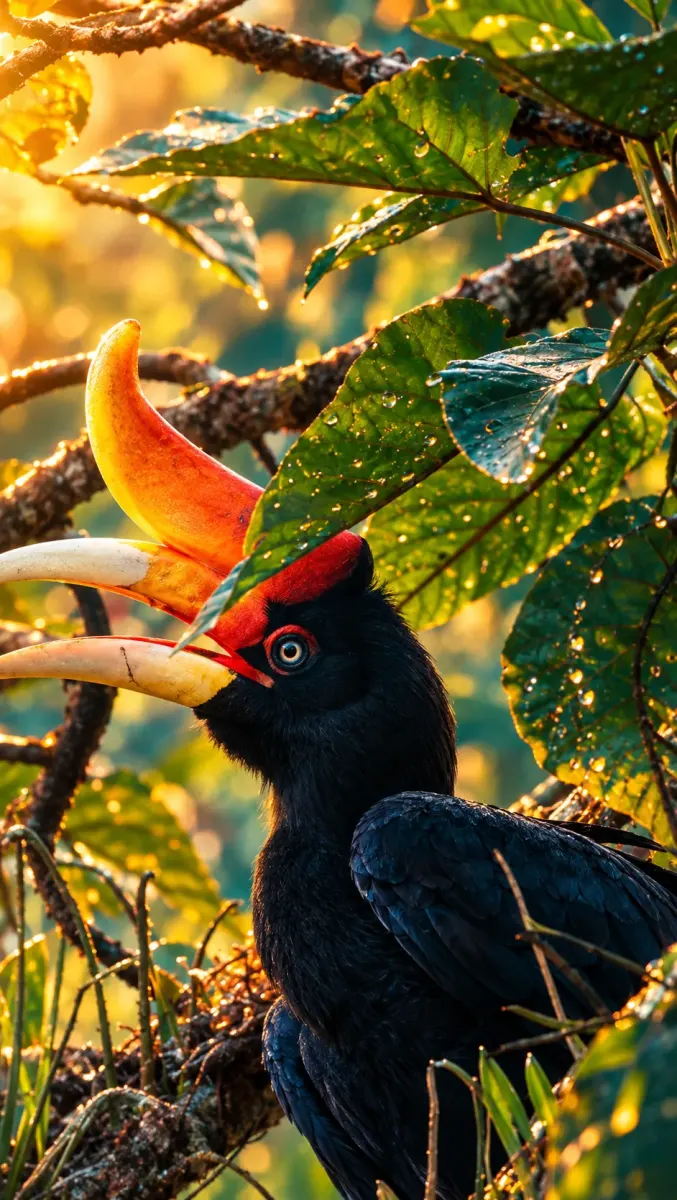
From December through February, Gunung Leuser’s lowland dipterocarp forest enters its primary fruiting cycle. Wild forest durian (Durio spp.), wild rambutan, forest jackfruit (cempedak), and massive strangler figs (Ficus) ripen across the lower river valleys. Drawn by the rich caloric bounty, Sumatran orangutans (Pongo abelii), Thomas's Leaf Monkeys (Presbytis thomasi), White-Handed Gibbons, and Rhinoceros Hornbills congregate in lower valley branches (15m–25m high) where viewing and photography angles are extraordinary.
- The "February Secret": While December and early January see moderate holiday showers, February is Bukit Lawang’s best-kept secret. Rainfall drops sharply to dry-season levels (
~120mmacross just9 rainy days), the rivers run crystal-clear emerald, fruit remains abundant in the canopy, and international visitor numbers are blissfully low.
C. Lush Canopy & Whitewater Tubing Season (September to November)
September through November marks North Sumatra’s wetter inter-monsoon period (240mm to 330mm per month, with afternoon showers occurring on 16 to 20 days). While clay trails become slicker and land leeches (pacet) are more active in damp leaf litter, mornings still frequently open with bright sunshine. The higher water volume swells the Bohorok River into fast-flowing Class II–III rapids, making traditional River Tube Rafting ("Jungle Taxi") an exhilarating whitewater ride—always subject to daily ranger water-gauge advisories on our River & Trail Advisory dashboard.
3. Complete 12-Month Weather, Fruit & Trail Condition Matrix
Use this field-verified 12-month reference table—synchronized with our Interactive Seasonality Radar—to compare temperature, average rainfall, river clarity, wildlife foraging patterns, and village crowd levels:
| Month | Temp Range | Avg Rainfall (Rainy Days) | Bohorok River Status | Trail Mud Index | Wildlife & Canopy Fruit Activity | Visitor Crowds |
|---|---|---|---|---|---|---|
| January | 22°C – 31°C | 190 mm (14 days) | Good & Clear | Moderate | Peak Fruit Season: Wild durian & rambutan draw primates to lower valley branches. | Low – Moderate (New Year week busy) |
| February | 23°C – 32°C | 120 mm (9 days) | Crystal Clear Emerald | Dry & Firm | Hidden Gem Month: Late forest fruits + sunny dry mornings. High primate activity. | Low (Very Peaceful) |
| March | 23°C – 32°C | 150 mm (11 days) | Clear | Mild | High spotting rate along primary ridges; hornbill nesting activity begins. | Low – Moderate |
| April | 24°C – 33°C | 170 mm (12 days) | Clear | Mild | Warm mornings, active gibbon dawn duets, and lush flowering understorey. | Moderate (Easter break) |
| May | 24°C – 33°C | 140 mm (10 days) | Crystal Clear | Very Dry & Stable | Start of Dry Season: Exceptional ridge visibility and pristine Landak River camping. | Moderate |
| June | 23°C – 32°C | 110 mm (8 days) | Crystal Clear | Dry & Firm | Top-tier trekking conditions; orangutans travel widely across upper and mid ridges. | Moderate – High |
| July | 23°C – 32°C | 105 mm (7 days) | Crystal Clear | Dry & Firm | Driest Month: Ideal for 3D2N–5D4N deep wilderness expeditions and river swimming. | Peak Season (Book early!) |
| August | 23°C – 32°C | 125 mm (9 days) | Clear | Firm | Sunny mornings, firm limestone trails, and lively evening atmosphere along the river. | Peak Season (Book early!) |
| September | 23°C – 31°C | 240 mm (16 days) | Fast Flowing | Slick Clay Ridges | Good morning wildlife tracking; afternoon showers refresh the forest canopy. | Low – Moderate |
| October | 22°C – 30°C | 310 mm (19 days) | Rapid & Thrilling | Muddy | Solitude & Rapids: Quietest trails in camp; high-flow Class II–III tubing runs. | Low (Very Quiet) |
| November | 22°C – 30°C | 330 mm (20 days) | High Flow (Monitored) | Muddy & Slick | Vibrant emerald moss, bioluminescent fungi at night, and early forest fig ripening. | Low |
| December | 22°C – 31°C | 260 mm (17 days) | Moderate – Fast | Moderate | Fruit Ripening Starts: Aromatic wild figs and early durians attract orangutans to the valley. | High (20 Dec – 5 Jan Holidays) |
4. Seasonal Botanical Wonders: Giant Flowers & Village Fruit Markets
Beyond primate tracking, your travel month also influences two extraordinary natural and cultural highlights in the wider Bohorok valley:
- Rafflesia arnoldii & Amorphophallus titanum Blooms at Batu Katak: Located 40 minutes south of Bukit Lawang, the karst limestone sanctuary of Batu Katak is home to both the world’s largest individual flower (Rafflesia arnoldii, reaching up to 1 meter across) and the world’s tallest inflorescence (the Titan Arum corpse flower, reaching up to 3 meters tall). While buds can develop in any month, transitions between wet and dry spells (particularly January–March and September–November) frequently trigger blooms. Because a Rafflesia flower stays open for only 4 to 6 days, our HPI desk maintains daily contact with Batu Katak community rangers to verify active blooms before you travel.
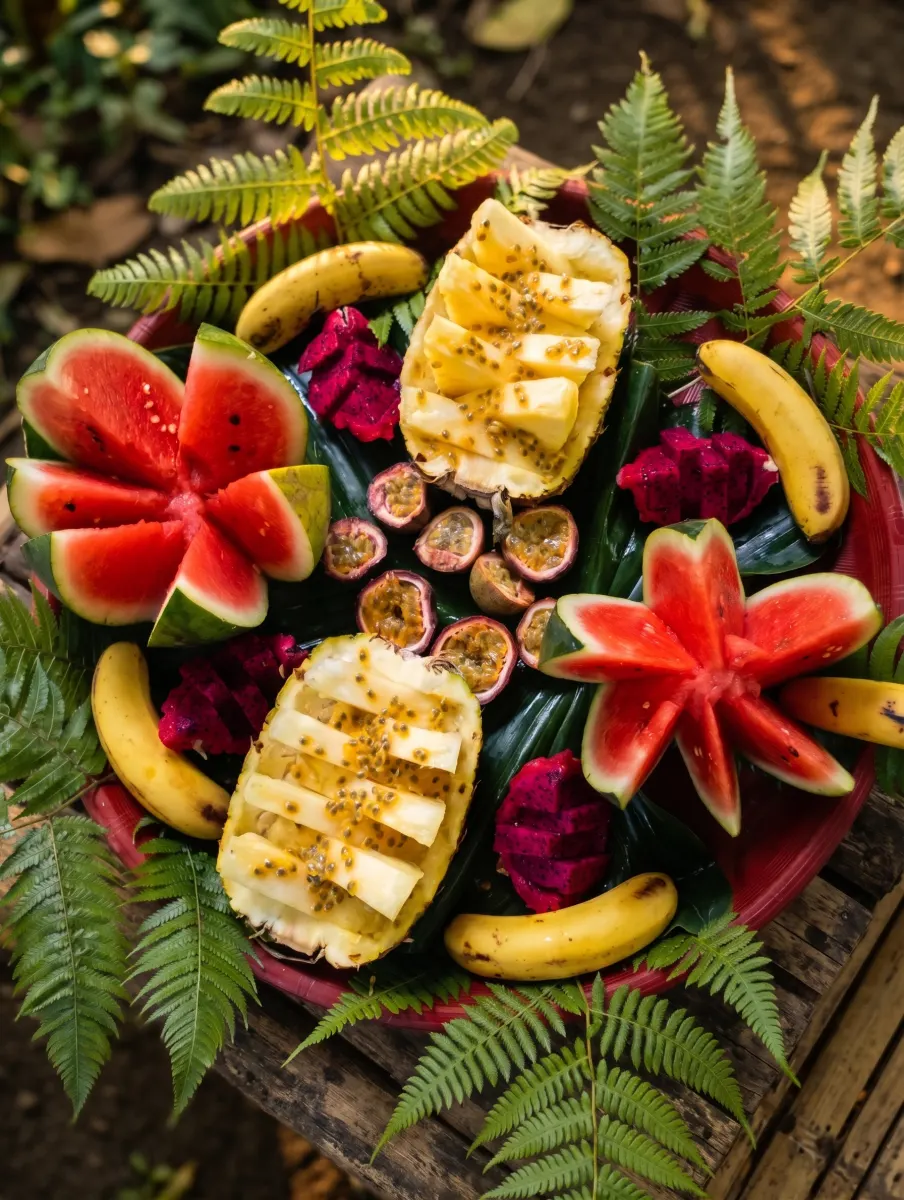
- The Friday Market Fruit Harvest (Pekan Jumat Gotong Royong): Visiting between December and February or June and August turns Bukit Lawang’s traditional Friday Morning Market and your jungle fruit platters into a tropical feast of creamy mountain durians, purple mangosteens (manggis), hairy red rambutans, snakefruit (salak), and sweet passionfruit (markisa).
5. Year-Round Transparent Trekking Rates (No Peak-Season Surcharges)
Unlike commercial resort destinations that inflate prices by 30%–50% during July, August, or Christmas, Explore Bukit Lawang maintains consistent, transparent HPI Langkat benchmark tariffs across all 12 months of the year. Whether you trek in quiet February or peak July, your fee directly covers your official TNGL park permit facilitation, HPI member guide team, jungle meals, and safety gear.
| Expedition Package | Best Seasonal Highlight | Standard Rate (EUR) | Approx. Benchmark (IDR) |
|---|---|---|---|
| 3-Hour Jungle Discovery | Morning dry window (08:30–11:30) year-round | €55 / person | €110 private (2-person min.) |
| 1-Day Orangutan Discovery + Tubing | Dec–Feb fruit feasts & May–Oct river tubing | €70 / person | €140 private (2-person min.) |
| 2D1N Jungle Camp + River Tubing | May–Aug clear Landak River pools & Feb solitude | €120 / person | €240 private (2-person min.) |
| 3D2N Deep Wilderness Expedition | Feb–Aug dry ridge crossings to Jamur Batu camp | €170 / person | €340 private (2-person min.) |
| Bohorok river tubing Only (1.5h) | May–Aug calm splash / Sep–Nov fast rapids | €25 / person | €50 private (2-person min.) |
6. How to Pack & Prepare for Your Chosen Month
- Trekking in Dry Months (February & May–August): Prioritize lightweight, breathable long-sleeved shirts, high-traction trail runners, electrolyte hydration packets, and swimwear for crystal-clear river pools.
- Trekking in Wetter or Fruit Months (September–January): Add a 20L roll-top waterproof dry bag inside your daypack, canvas anti-leech socks, a lightweight reusable rain poncho, and deep-lugged shoes (or local studded rubber Sepatu Getah). Read our dedicated Rainy-Day Trekking & River Contingency Protocol to understand how guides adapt trails during heavy showers.
Check Your Travel Month & Trail Conditions
Compare all 12 months interactively on our Season Radar, check live satellite rainfall and Bohorok River water levels, or customize your Packing Checklist by season.