Explore the 50-year history of the Bohorok Orangutan Rehabilitation Center in Bukit Lawang (1973–now): from 1973 Swiss founders to modern wild conservation.
Every traveler who crosses the suspension bridge into Gunung Leuser National Park at Bukit Lawang hears the term "semi-wild orangutans" alongside "wild orangutans." Where did this unique population come from, why was Bukit Lawang chosen over 50 years ago as one of the world’s first great-ape reintroduction sites, and why did the old ranger feeding platforms close permanently in 2015?
The story of the Bohorok Orangutan Rehabilitation Center (1973–Present) is one of the most important chapters in Southeast Asian conservation history—tracing a 50-year arc from early rescue and rehabilitation to modern, zero-contact ethical wildlife ecotourism.
1. 1973: Regina Frey, Monica Borner & the Birth of the Bohorok Station
In the early 1970s, deforestation and the illegal wildlife trade across Sumatra had left dozens of orphaned infant Sumatran orangutans (Pongo abelii) confiscated by Indonesian forestry authorities with nowhere to go. Because infant orangutans normally spend 7 to 9 years learning forest survival skills directly from their mothers—memorizing hundreds of fruiting tree species and mastering how to weave nightly branch nests—orphaned juveniles cannot simply be dropped into the jungle on their own.
In 1973, two pioneering Swiss zoologists, Regina Frey and Monica Borner, partnered with the Frankfurt Zoological Society (FZS), WWF, and the Indonesian Directorate of Nature Conservation (PPA, now Balai Besar TNGL) to establish the Bohorok Orangutan Rehabilitation Station on the steep limestone ridges overlooking the Bohorok River at Bukit Lawang.
How "Jungle School" Worked in the 1970s & 1980s
- Quarantine & Medical Screening: Confiscated orphans were first treated for malnutrition, parasites, and human respiratory infections in quarantine cages near the river.
- Canopy Climbing & Nest-Building Lessons: Once healthy, young orangutans were released into the surrounding primary dipterocarp forest, where rangers provided a deliberately monotonous supplemental diet (boiled rice, milk, and bananas) twice a day on a wooden forest platform.
- Why the Platform Food Was Intentionally Plain: The supplemental rations were designed only as a safety net so newly released juveniles would not starve while gradually discovering that wild rainforest figs (Ficus), durians, rambutans, and forest leaves tasted far better—encouraging them to forage deeper into the canopy and integrate with native wild orangutans.
2. Chronological Timeline: 50+ Years of Conservation in Bukit Lawang
| Era / Year | Milestone in Bukit Lawang & Gunung Leuser | Conservation & Tourism Impact |
|---|---|---|
| 1973 | Bohorok Rehabilitation Station Founded by Regina Frey & Monica Borner with WWF/FZS | First rescued Sumatran orangutans trained to forage and build nests in the Bohorok valley |
| 1980 | Gunung Leuser National Park (TNGL) formally declared (later UNESCO Biosphere Reserve & World Heritage) | Legal national park protection established across 792,675+ hectares; local HPI guide association formed |
| 1995 – 2001 | Transition to Pure Reintroduction Sites (SOCP / Jantho & Bukit Tigapuluh) | Scientists stop releasing new orphans at tourist hubs to prevent human-primate disease transmission |
| 2002 – 2015 | Phase-Out of Supplemental Feeding Platforms at Bohorok | Balai Besar TNGL permanently closes the old feeding platform in 2015 so all orangutans forage entirely independently in the wild |
| 2016 – Present | Modern Ethical Canopy Tracking Era | Mandatory SIMAKSI park permits, HPI member guides, strict 10-meter distance, and zero feeding/touching rules |
3. Why Was the Old Feeding Platform Closed Permanently in 2015?
If you read older guidebooks from the 1990s or 2000s, they often describe taking a canoe across the Bohorok River to watch rangers feed milk and bananas to orangutans on a wooden platform at 08:00 and 15:00. In 2015, Balai Besar TNGL and conservation biologists permanently closed the feeding platform for three vital scientific reasons:
- Preventing Human-to-Ape Disease Transmission (97% Shared DNA): Crowding dozens of tourists around a single wooden platform where orangutans descended to eat created a high risk of transmitting human influenza, tuberculosis, herpesviruses, and COVID/respiratory pathogens to a critically endangered species.
- Encouraging Natural Wild Foraging: By 2015, the original 1970s–1980s rehabilitant females had lived in the forest for 25 to 35 years and raised completely wild-born sons and daughters. Closing the platform stopped older individuals from lingering near the river border and restored natural territorial dispersion across fruiting fig ridges.
- Reducing Primate Stress & Aggression: Artificial food provisioning caused unnatural competition between orangutans and pig-tailed/long-tailed macaques, occasionally leading to defensive behavior toward visitors who stood too close.
4. What Does "Semi-Wild" vs "Wild" Mean in Bukit Lawang Today?
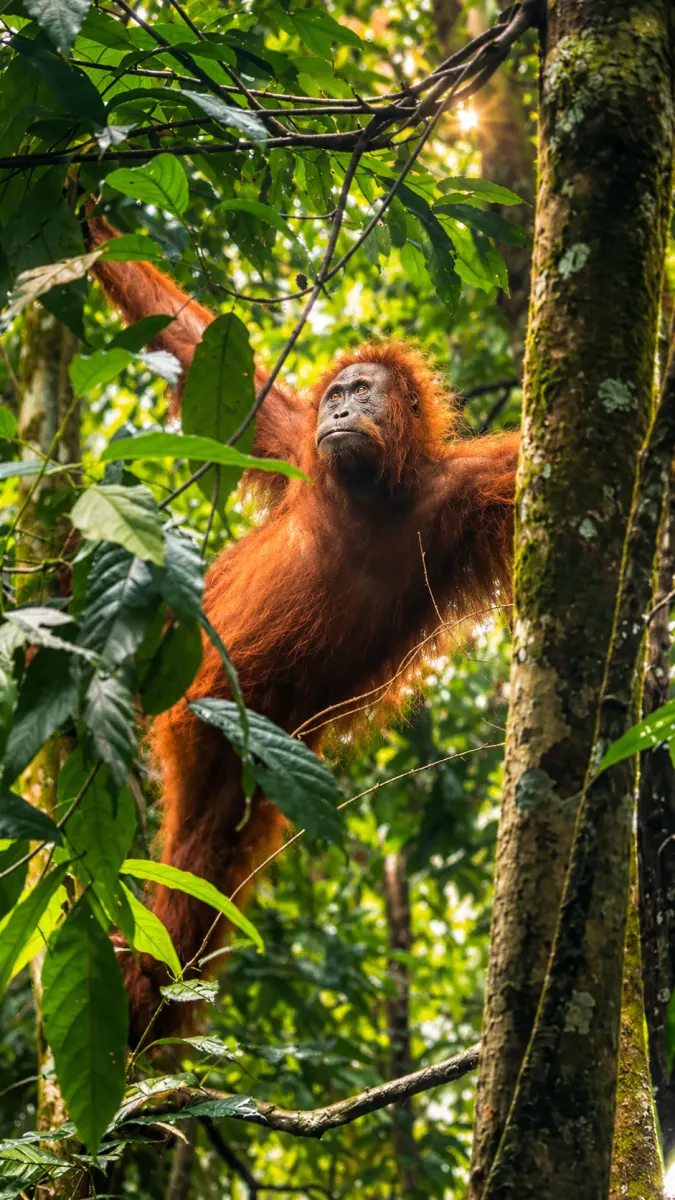
Today, when you trek with our HPI member guides on a 1-Day Discovery Trek (€70) or 2D1N Overnight Camp (€120), every orangutan you encounter lives completely free in the rainforest canopy, builds its own fresh night nest every evening, and finds all of its own wild food (How Wild Orangutans Live).
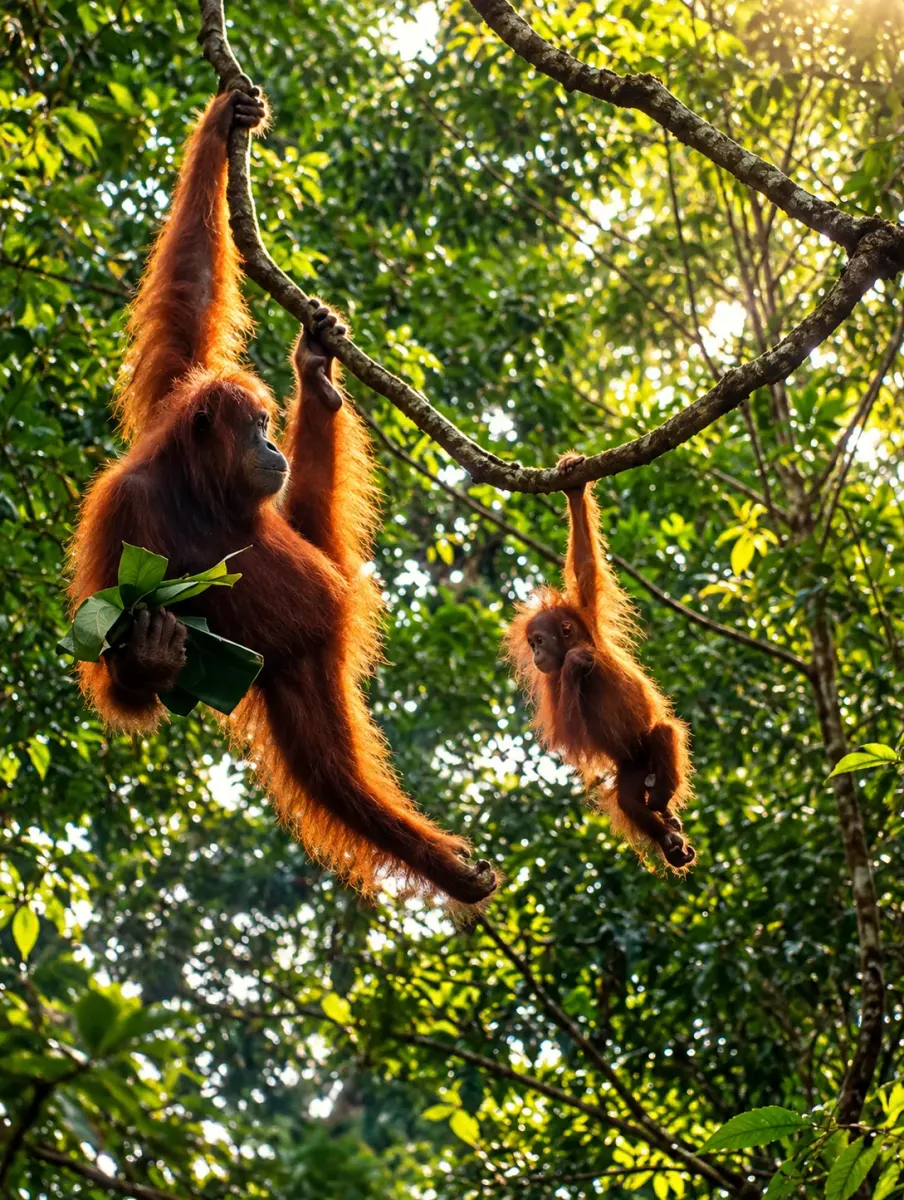
- "Semi-Wild" (Rehabilitant Heritage / Habituated Mothers): Refers to the surviving older rehabilitant matriarchs from the 1980s/1990s and their immediate wild-born offspring whose territories overlap the lower Bohorok, Kapal, and Landak ridges. Because they grew up seeing rangers and trekkers, they remain calm and unbothered when humans observe quietly from 10 meters away.
- "Purely Wild" (Unhabituated Native Leuser Clans): Refers to native wild orangutans—including massive flanged dominant males with booming long-calls and shy mothers deeper in the Landak, Alur Perak, and Bekail basins—who had zero connection to the 1973 center.
5. How Ethical Trekkers Protect the Legacy of Bohorok Today
The closure of the old feeding platform transformed Bukit Lawang for the better: instead of a passive 30-minute zoo-like viewing show, visitors now experience authentic rainforest tracking alongside local naturalist guides. To honor and protect this 50-year conservation legacy, every trekker must uphold our 7 Mandatory Ethical Observation Rules:
- Never Ask a Guide to Lure, Call, or Feed an Orangutan: Guides who illegally hide fruit in their pockets to lure an orangutan down for a tourist "selfie" violate national park law and endanger the animal’s life. At Explore Bukit Lawang, our HPI member guides strictly enforce zero feeding and zero touching.
- Keep a Minimum 10-Meter Buffer: If a habituated orangutan mother and baby descend a tree trunk near the trail, step back slowly with your guide to maintain a 10-meter safety corridor.
- Postpone Your Trek if You Have a Fever or Flu: Because great apes are susceptible to human respiratory viruses, our fair rescheduling policy lets you move your trek date if you wake up with a cold.

Explore Bukit Lawang Team
HPI Member Guides, Wildlife Naturalists & Conservation CollectiveThe editorial and expedition team of Explore Bukit Lawang — local HPI member guides, primate trackers, river captains and conservation educators born along the Bohorok River.
Ready to Trek with Our Local HPI Guides?
National park permits, small private groups, and traditional river tubing included on every expedition.