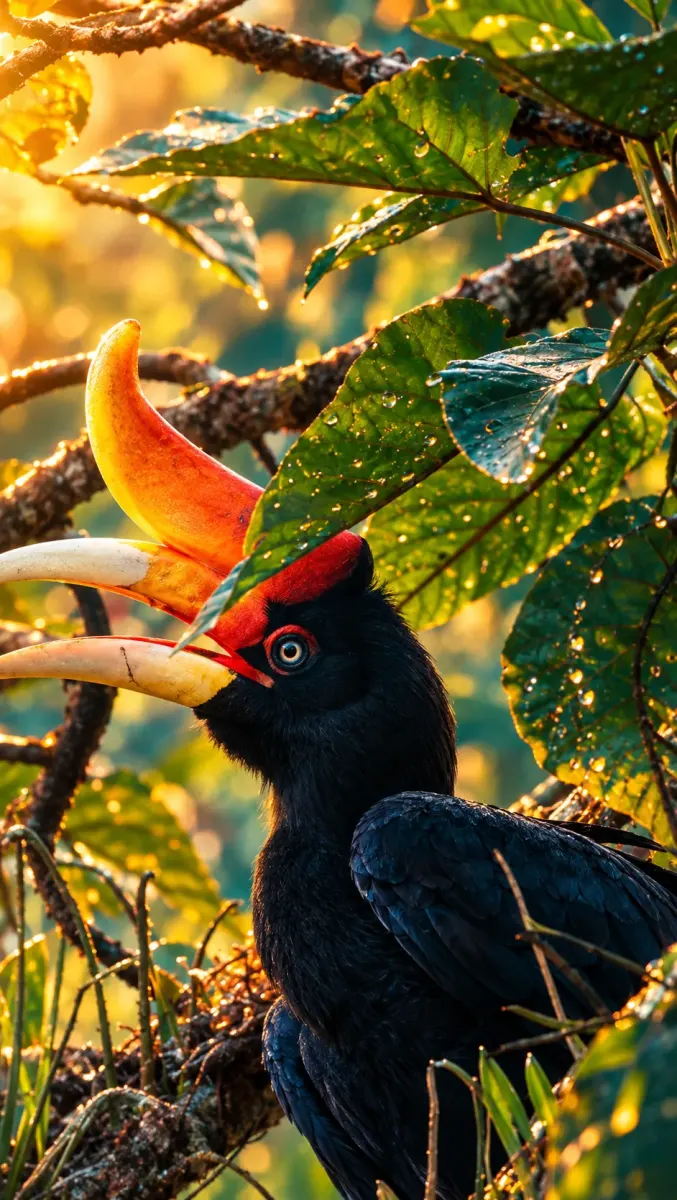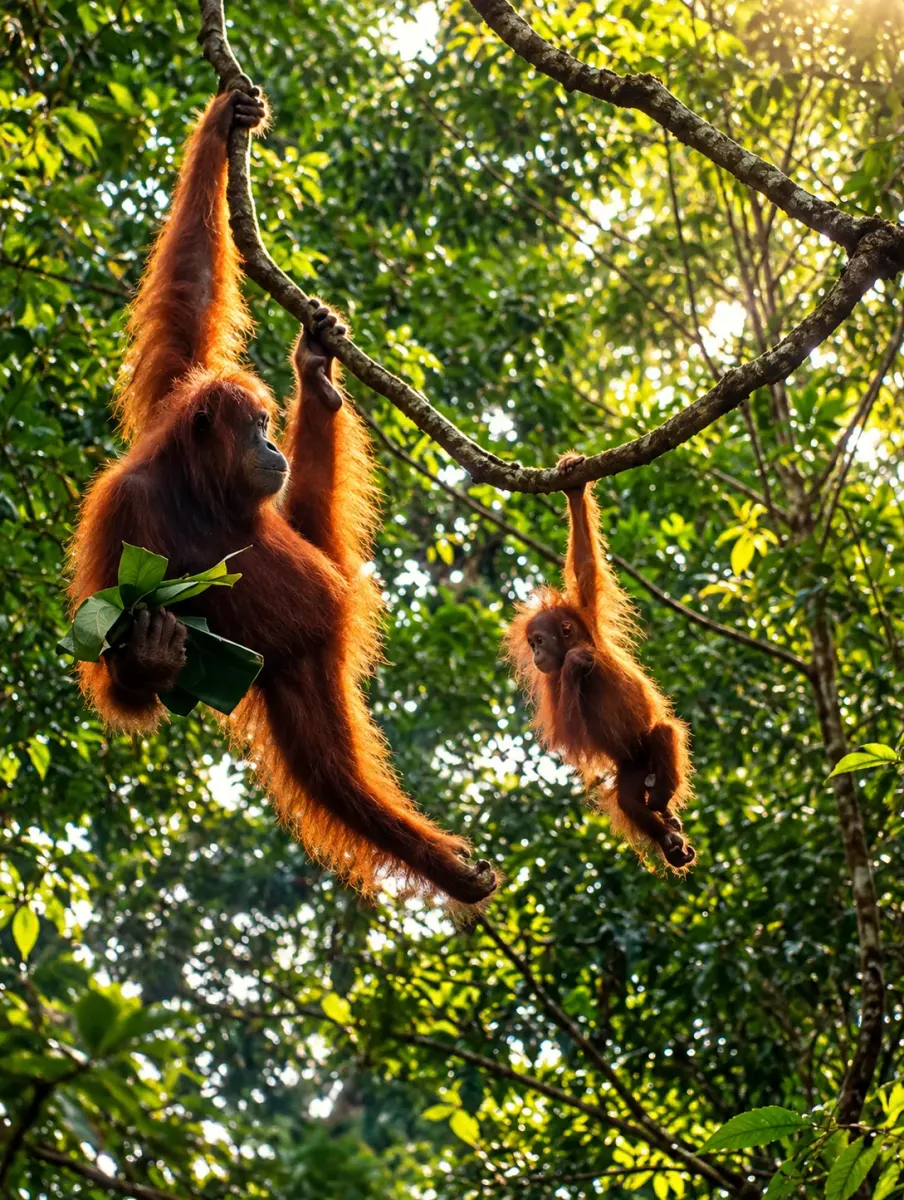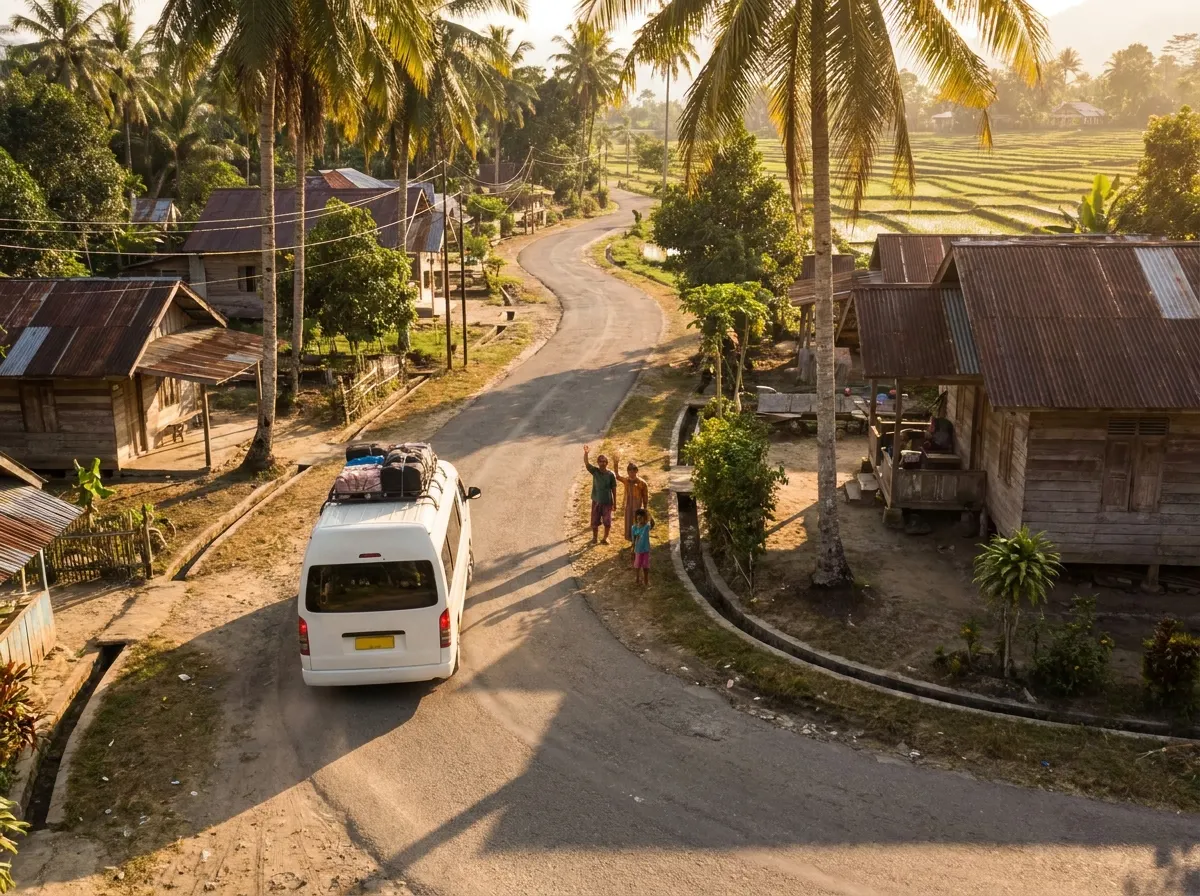
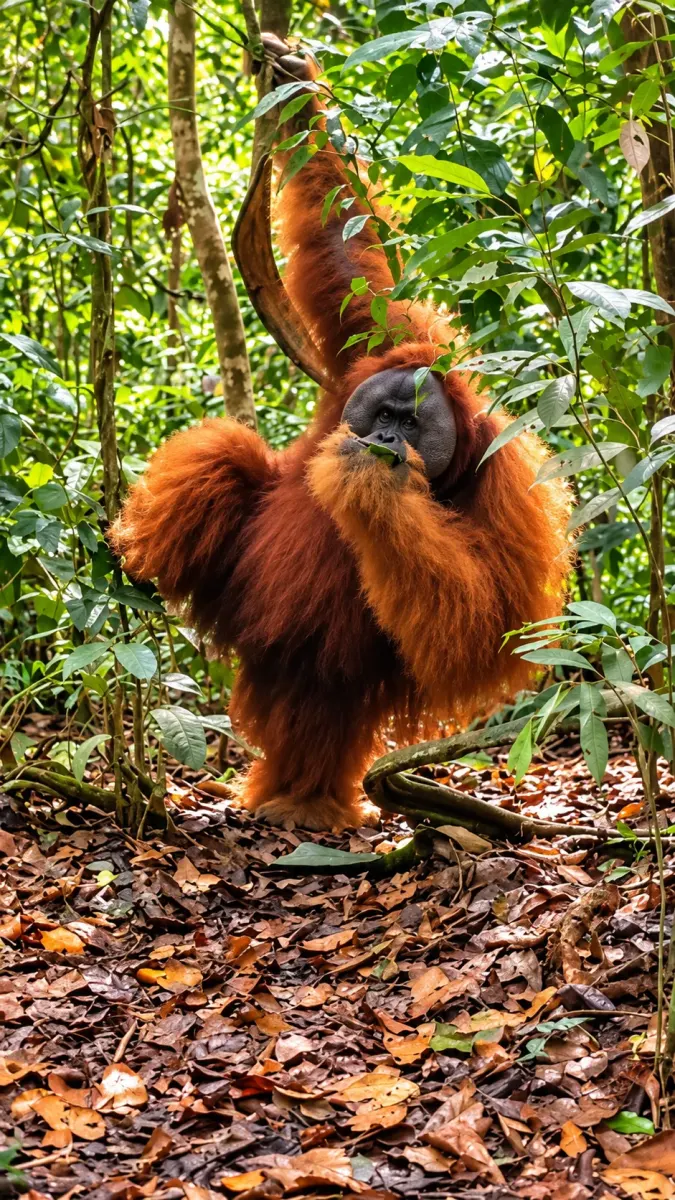
Seven mandatory ethical rules for observing wild Sumatran orangutans in Gunung Leuser National Park: 10m distance, zero feeding, and HPI trail protocols.
Watching a critically endangered Sumatran orangutan (Pongo abelii) peel wild forest figs high in the canopy of Gunung Leuser National Park is a privilege that carries profound ecological responsibility. Because humans and orangutans share roughly 97% of their DNA, the rules governing wildlife observation in Bukit Lawang are not mere trail etiquette—they are vital biological safeguards established by Balai Besar Taman Nasional Gunung Leuser (BBTNGL), the IUCN Primate Specialist Group, and member guides of DPC HPI Kabupaten Langkat.
Every trekker entering the national park through our Guest Permit Pre-Registration agrees to abide by strict BBTNGL conservation standards: minimum 10-meter observation distance, strictly no feeding or touching, and zero commercial sighting guarantees.
1. The 97% DNA Reality: Why Human Germs Endanger Great Apes
In evolutionary terms, great apes are our closest living relatives. While this genetic closeness makes an orangutan’s facial expressions, problem-solving intelligence, and mother-infant bond deeply moving to witness, it also creates a severe vulnerability known as reverse zoonosis (anthroponosis)—the transmission of human pathogens to wild primates.
A mild human rhinovirus, seasonal influenza, respiratory syncytial virus (RSV), or coronavirus that causes only a slight sore throat in a healthy tourist can trigger fatal bacterial pneumonia in a wild Sumatran orangutan, Siamang, or Thomas Leaf Monkey. In the 90%–95% humidity of the Gunung Leuser understory, microscopic respiratory droplets linger in still air and on low vegetation. This scientific reality is the foundation of the seven mandatory rules below.
2. The 7 Mandatory Rules for Ethical Orangutan Observation
Whether you are joining a 3-hour discovery walk or a multi-day wilderness traverse from our Complete Guide to Ethical Orangutan Trekking Bukit Lawang, your HPI member guide will enforce these seven non-negotiable protocols:
- Maintain a Strict 10-Meter (33-Foot) Minimum Distance: Never approach closer than 10 meters to any orangutan, macaque, or gibbon. When an orangutan is high in a fruiting dipterocarp tree, 10–25 meters of vertical separation occurs naturally. If a semi-wild orangutan descends onto a lower branch or trail path, immediately step back slowly behind your guide to preserve the 10-meter safety buffer.
- Strictly No Feeding, No Baiting & No Physical Contact: Handing pineapple, bananas, or snacks to wildlife—or attempting to touch or take a "selfie" close to an orangutan—is strictly illegal in Gunung Leuser National Park. Feeding alters wild foraging instincts, causes severe dental and metabolic disease in primates, and teaches animals to approach humans aggressively for food. Read why the historic feeding station was closed in The 50-Year History of the Bohorok Orangutan Rehabilitation Center.
- Never Eat or Display Food Within Sight of Primates: Even holding a piece of fruit or crinkling a plastic snack wrapper while an orangutan or pig-tailed macaque is nearby can provoke an approach. All food remains sealed inside zipped backpacks until your guide leads the group to a designated primate-free ridge clearing for lunch.
- Do Not Enter the Rainforest If You Feel Unwell: If you wake up on the morning of your trek with a fever, cough, flu, cold, or gastrointestinal infection, do not enter the park. Inform our HPI coordinator immediately—we provide fair medical rescheduling so you never feel pressured to hike while contagious.
- Keep Group Sizes Small (Max 5–6 Pax) & Observe in Quiet: Large, noisy crowds stress arboreal primates, especially mothers nursing infants. Communicate in low whispers, silence mobile phones, and never whistle, clap, or imitate primate calls to get an animal to look toward your camera.
- Limit Observation Time to 15–20 Minutes per Individual: Lingering beneath a single orangutan for an hour can prevent the animal from descending to cross a gap or feeding normally. After 15 to 20 minutes of quiet observation and photography (strictly without flash), ethical guides move the group onward along the ridge.
- Practice complete Zero-Waste Leave No Trace: Never drop fruit peels, tissue paper, or organic food scraps on the forest floor. Discarded non-native fruit rinds draw primates down from the safe canopy to the ground (where parasites and predators exist). Our porters pack every gram of waste back out of the park—learn more in Leave No Trace & Zero-Waste Jungle Camping.
3. Field Protocol Matrix: How to React During Real Trail Encounters
Understanding orangutan body language helps you stay calm, safe, and respectful on the trail. You can also study species calls and behaviors in advance using our Interactive Gunung Leuser Wildlife Spotter Tool.
| Trail Scenario / Behavior | What It Means | Mandatory Trekker Response |
|---|---|---|
| Orangutan foraging calmly in upper canopy (15m–35m high) | Relaxed, natural feeding behavior; unbothered by human presence below. | Stand together on the trail in a compact group, whisper quietly, use a telephoto lens (no flash), and do not block the path. |
| Orangutan makes a sharp “Kiss-Squeak” sound or shakes dead branches | Clear annoyance / stress warning that observers are too close or lingering too long. | Immediately widen your distance beyond 15 meters and follow your guide calmly along the trail to give the orangutan space. |
| Semi-wild orangutan descends a trunk or walks along the ground trail | Older rehabilitated individuals occasionally use cleared human trails as easy travel corridors. | Never run or scream. Keep daypacks zipped, step slowly backward behind your HPI guide, and never trap an animal between two groups. |
| Dominant flanged male emits a booming “Long Call” across the valley | Acoustic territorial broadcast to rival males and receptive females (carries up to 1.5 km). | Pause in complete silence to listen; your tracker will determine a safe ridge vantage point to observe from afar. |
| Spotting a Slow Loris or civet during an evening walk | Sensitive nocturnal mammal with high-density rod photoreceptor eyes. | Never shine a bright white headlamp beam directly into its eyes; use red-light mode or angled indirect illumination only. |
4. Why Ethical Guides Never Promise Wildlife Sightings
When researching Sumatra tours online, you may occasionally see websites advertising a “99% or 100% Orangutan Sighting Guarantee.” Both scientifically and ethically, commercial wildlife guarantees have no place in a true national park:
- Wild Animals Roam Freely: Gunung Leuser National Park spans nearly 800,000 hectares of unfenced mountainous jungle. Wild orangutans travel continuously between upper valleys and lower ridges depending on weather and seasonal fruiting cycles (such as wild figs, rambutan, and forest durian).
- Guarantees Incentivize Illegal Baiting: When an unregistered guide promises a "guaranteed close encounter," they face commercial pressure to lure semi-wild individuals down from the trees using hidden fruit—a practice that directly endangers both primates and tourists.
- How Expert Trackers Achieve High Natural Spotting Probability: Instead of artificial baiting, DPC HPI Kabupaten Langkat member guides rely on decades of field craft—reading fresh half-eaten fig drops on the forest floor, identifying the age of leafy night nests in the crown of trees, and communicating silently with fellow rangers across neighboring ridges. Whether you choose our 1-Day Trek or 2D1N Overnight Camp, this authentic tracking process makes every wild sighting deeply rewarding.
5. Transparent Conservation Tariffs: How Your Booking Protects the Park
Booking at the standardized HPI tariff ensures your expedition funds legal conservation entry permits (PNBP) at the Balai Besar TNGL checkpoint and pays fair living wages to local trackers, camp cooks, and former loggers who now guard the forest edge. Read our full breakdown in HPI Guide Rates & Safety in Bukit Lawang (2026) and How Gunung Leuser National Park Permits Work.
Includes official 1-day TNGL permit, HPI lead guide + assistant tracker, fruit snack, and ethical briefing.
Includes multi-day TNGL permits, pack-out riverside camp, porters, freshly boiled water, and tube return.
Specialized behavioral observation, nest-count logging, and ethical telephoto wildlife photography pace.
Trek With Local HPI Member Guides
Explore our ethical trekking packages, pre-register your passport details for official Balai Besar TNGL checkpoint clearance, or discover the 8 primate species of Bukit Lawang in our interactive field guide.