Explore Bukit Lawang after dark on a guided night jungle walk: spot Greater Slow Lorises, flying squirrels, horned frogs, glowing fungi & night insects.
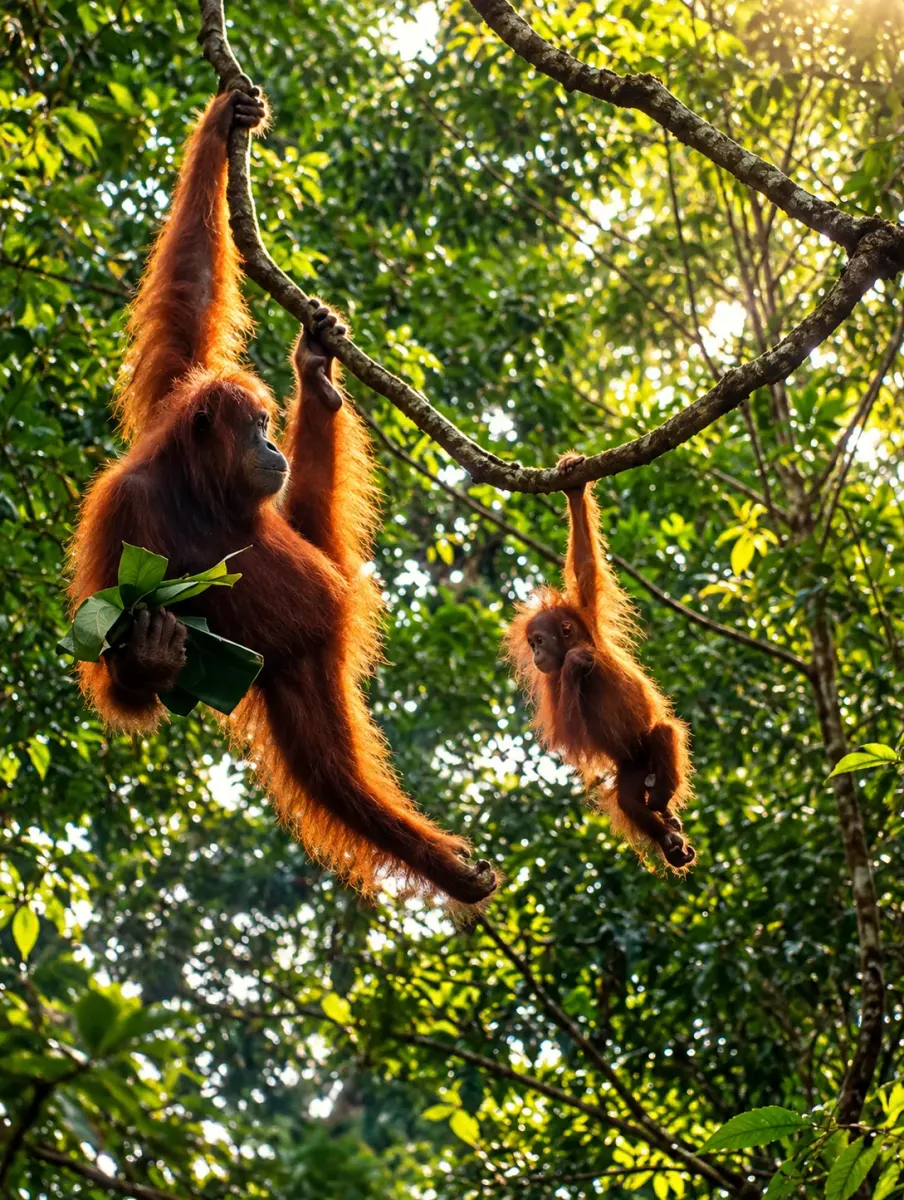
When the tropical sun dips behind the limestone ridges of Gunung Leuser National Park at 18:30 WIB, the diurnal rainforest falls silent. Wild orangutans settle into freshly woven canopy nests, Thomas’s Leaf Monkeys huddle along horizontal branches, and the afternoon chorus of cicadas fades away.
Yet as darkness blankets the Bohorok valley, an entirely different world awakens. Equipped with headlamps, venturing into the secondary forest edges and stream gullies on a guided nocturnal night walk (19:30 – 22:00 WIB) reveals glowing eyes in the high fruit trees, neon green bioluminescent mushrooms, gliding squirrels, and camouflaged reptiles. This field guide explores the remarkable wildlife encountered after dark around Bukit Lawang, crucial slow loris ethics, and essential night-hiking gear.
1. The Crown Jewel of the Night: The Greater Slow Loris (Kukang)
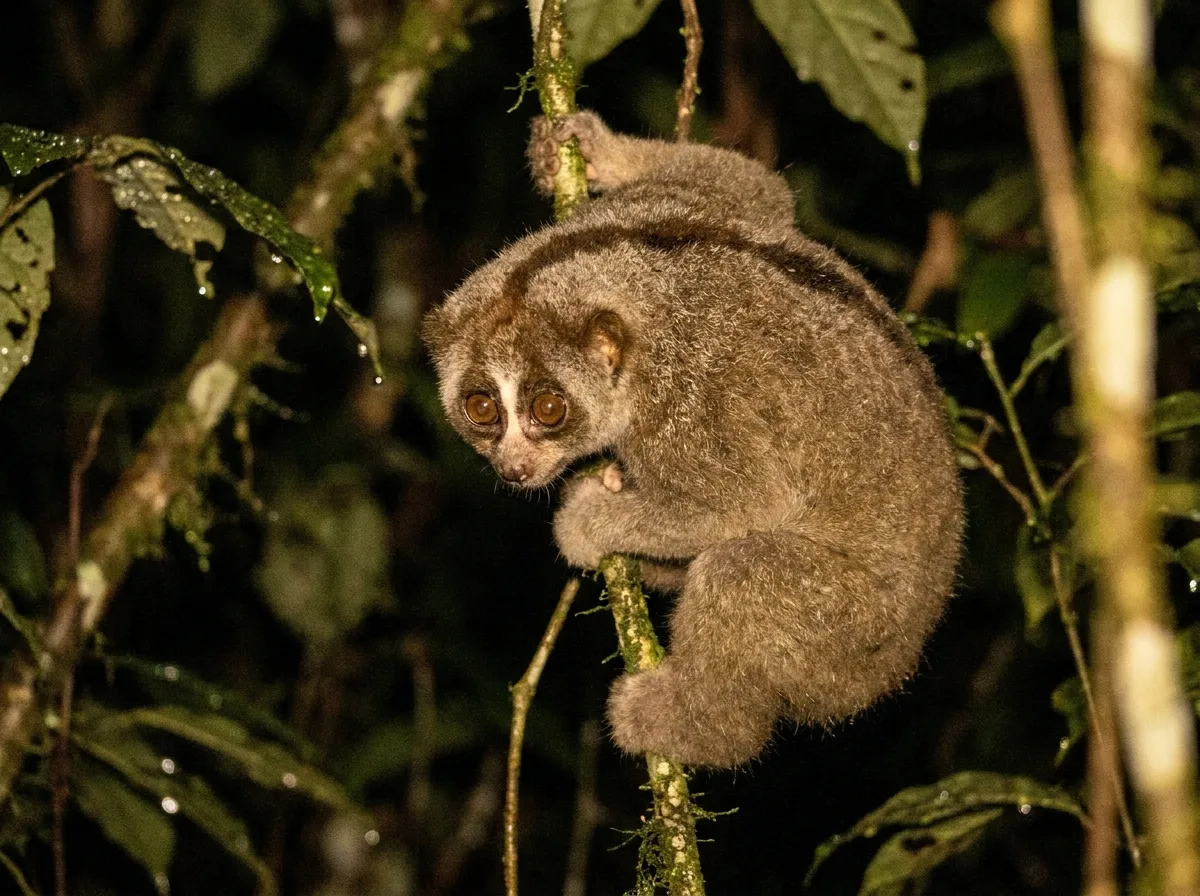
For most travelers, the premier goal of a Bukit Lawang night safari is spotting the Greater Slow Loris (Nycticebus coucang), known locally across Indonesia as the Kukang or Malu-malu ("the shy one").
Fascinating Biological Adaptations
- The Glowing Orange Tapetum Lucidum: When your guide sweeps a diffused light beam across the canopy of flowering rubber or fig trees, slow lorises are detected by the fiery orange reflection bouncing off their tapetum lucidum—the reflective layer behind the retina that magnifies ambient starlight.
- Silent Stealth Grip: Slow lorises possess specialized vascular bundles in their wrists and ankles called retia mirabilia. These vascular networks supply oxygen continuously to their extremities, allowing a loris to clamp tightly onto a branch for hours without cramping or making a sound as it stalks sleeping insects, floral nectar, and tree gum.
- The World’s Only Venomous Primates: On the inside of a slow loris’s elbow sits a specialized brachial gland. When threatened, the loris raises its arms above its head, licks the gland to mix the oily secretion with saliva, and delivers a venomous bite that can cause severe anaphylaxis in humans and predators.
2. Gliders, Frogs & Sleeping River Birds: What Else Awakens at Night?
A night walk through the river ravines and secondary forest fringes of Bukit Lawang offers far more than primates:
| Nocturnal Creature | Scientific Name | Where to Spot It | Behavior & Highlights |
|---|---|---|---|
| Red Giant Flying Squirrel | Petaurista petaurista | Upper canopy of tall forest trees | Launches from high branches, spreading its furry patagium membrane to glide silently up to 50 meters between trees |
| Malayan Horned Frog | Pelobatrachus nasutus | Damp forest leaf litter beside streams | Ultimate camouflage: pointed "horns" over its eyes and leaf-vein skin patterns make it invisible among dead foliage |
| Bioluminescent Ghost Fungi | Mycena species | Decaying fallen logs in moist ravines | Turn off your headlamps completely to see these ethereal mushrooms glow with a continuous, cold neon-green bioluminescence |
| Sleeping River Kingfishers | Ceyx & Alcedo species | Thin twigs hanging 1m over forest streams | Roosting fast asleep in a puffy ball of feathers; will tolerate quiet observation without flying away |
| Tailless Whip Scorpions | Amblypygi species | Limestone karst rock faces & tree trunks | Alien-like arachnids with long whiplike sensory antennae; completely harmless with zero venom or stingers |
3. Forest Safety Realism: Snakes & Footwear at Night
Many travelers ask if walking in the rainforest at night is dangerous due to snakes. Tropical forests are home to reptiles, but simple awareness and professional guiding keep night walks safe:
- Reticulated Pythons & Pit Vipers: While non-venomous Reticulated Pythons (Malayopython reticulatus) and arboreal Wagler’s Pit Vipers (Tropidolaemus wagleri) inhabit the ecosystem, they are ambush predators that stay still and avoid human noise. Guides lead single-file, tapping walking sticks to create ground vibrations that alert reptiles to move away.
- Always Watch Where You Place Your Hands: In the dark, never lean or grab blindly onto tree trunks or branches without illuminating them first with your torch, as tree barks can conceal spiny rattan thorns, harmless huntsman spiders, or resting caterpillars.
- Footwear & Leech Protection: Closed hiking shoes or running sneakers with socks are mandatory (no flip-flops or open sandals!). Tuck your trousers securely into your socks or wear canvas anti-leech socks to prevent forest ants and nocturnal damp-ground leeches from entering your shoes.
4. Logistics: How to Book a Guided Night Safari
| Activity Detail | Standard Specification |
|---|---|
| Departure Time & Duration | 19:30 to 22:00 WIB (approx. 2 to 2.5 hours) |
| Meeting Point | Pickup at your riverside eco-lodge or central village bridge |
| Standard Rate | €15 / person (approx. IDR 250,000, min. 2 pax) |
| Inclusions | English-speaking HPI member wildlife guide, high-power headlamp, local village permits |
| Difficulty & Terrain | Easy to Moderate (unpaved dirt paths, gentle plantation slopes, stream crossings) |

Explore Bukit Lawang Team
HPI Member Guides, Wildlife Naturalists & Conservation CollectiveThe editorial and expedition team of Explore Bukit Lawang — local HPI member guides, primate trackers, river captains and conservation educators born along the Bohorok River.
Ready to Trek with Our Local HPI Guides?
National park permits, small private groups, and traditional river tubing included on every expedition.