Where do you store your big backpack or suitcase during an overnight jungle trek in Bukit Lawang? Free luggage storage, valuable lockers & laundry rates.
If you are traveling across Indonesia for two or three weeks with a 65-liter backpack or a rolling hard-shell suitcase, you definitely do not want to haul 18 kilograms of city clothes, laptops, and extra shoes up steep rainforest ridges in Gunung Leuser National Park.
Fortunately, Bukit Lawang’s entire village infrastructure is built around multi-day jungle trekkers. Whether you are heading out on a 2D1N Overnight Camp or a 5D4N Deep Wilderness Expedition, storing your main luggage in the village is completely free, secure, and effortless. Here is your practical field guide to luggage storage, locking up passports and electronics, motorized becak luggage porters, and post-trek village laundry services.
1. How Free Luggage Storage Works During Your Overnight Jungle Trek
When you check out of your Bukit Lawang room at 08:00 WIB to start an overnight trek, you only take a lightweight 15L to 25L daypack (3.5 to 5 kg total weight) into the rainforest (see our Daypack Checklist). Your large 50L–75L main backpack or rolling suitcase stays behind in one of two secure places:
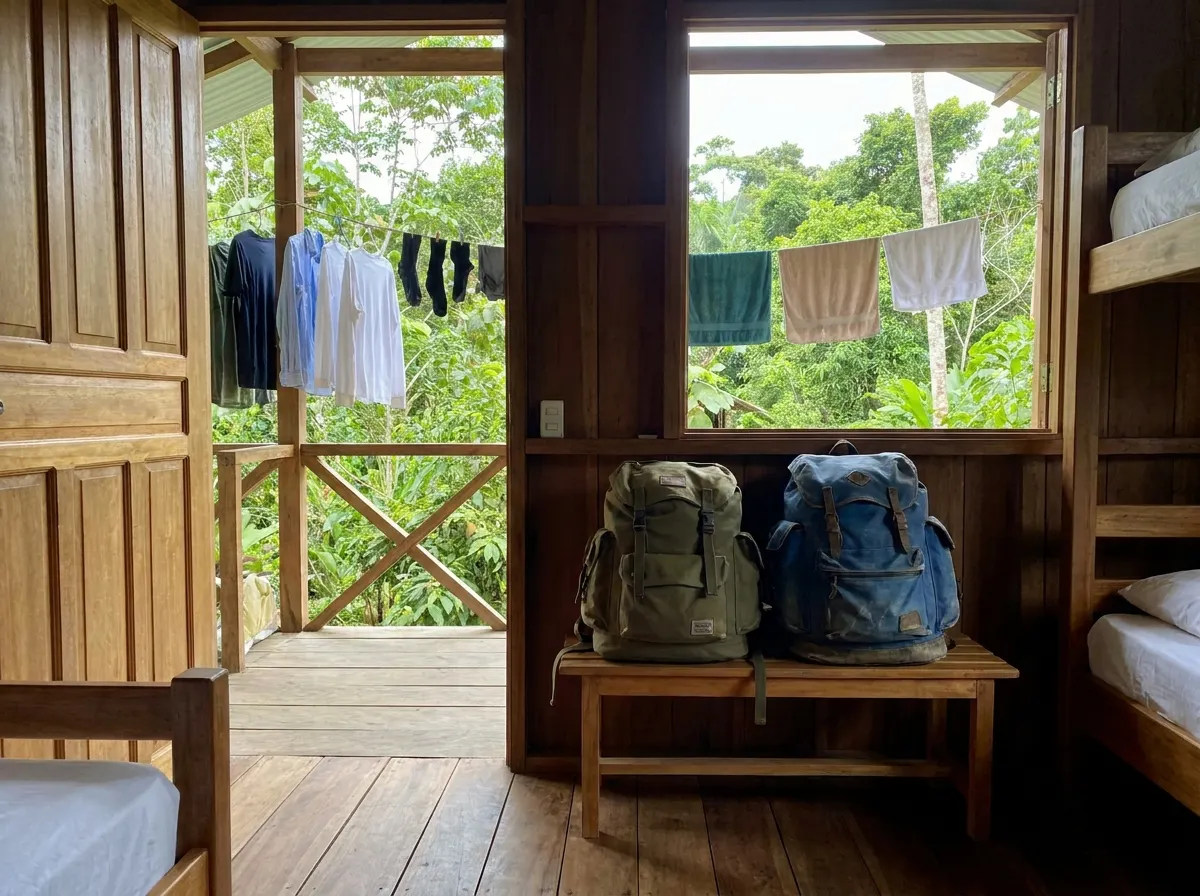
- Option A — Your Riverside Eco-Lodge’s Locked Luggage Room (Free): Every established guesthouse and eco-lodge along the Bohorok River has a dedicated, locked luggage storage room behind the reception desk for guests who are out camping in the jungle—even if you are checking out on the afternoon your trek finishes!
- Option B — Our Explore Bukit Lawang Village Basecamp Locker (Free): If you are switching guesthouses after your trek or departing immediately by private car to Berastagi or Lake Toba at 16:00 WIB after your river tubing ride, you can store your main suitcases inside our locked basecamp office right near the shower facilities and parking bridge.
2. How to Pack & Secure Your Stored Bag (Passports, Laptops & Moisture)
To keep your stored luggage organized, dry, and secure while you are camping in the rainforest, follow these four veteran traveler habits:
- Bring a Small Travel Padlock for Your Main Zipper: While eco-lodge storage rooms are locked and monitored by reception staff, snapping a simple TSA cable padlock onto the main zipper of your suitcase—and keeping your laptop, extra credit cards, and excess cash locked inside an interior pouch—gives you total peace of mind.
- Should You Bring Your Physical Passport Into the Jungle or Leave It in Storage?
Never bring your physical passport book into the rainforest if you can avoid it! A single accidental slip into a river or tropical downpour can damage your passport’s bio-page chip (which Indonesian immigration strictly inspects upon exit). Instead, keep a high-resolution color photo of your passport bio-page and e-VOA on your phone (and a paper photocopy in your daypack) for TNGL SIMAKSI permit registration, and lock your physical passport inside a waterproof Ziploc bag inside your stored hotel safe or locked suitcase. - Leave One "Fresh Clean Outfit + Towel" at the Very Top of Your Stored Bag: When your Bohorok River Tube Rafting raft lands back in the village around 15:00 WIB, you will be wet and muddy. Having a clean set of dry underwear, a fresh t-shirt, shorts, and shower soap sitting right at the top of your stored suitcase means you can grab them in 10 seconds and head straight into the shower!
- Never Seal Wet/Sweaty Clothes Inside Your Stored Suitcase Before Trekking: In Bukit Lawang’s 85% humidity, a damp shirt sealed inside a closed suitcase for 2 or 3 days will develop mildew odors quickly. Air out or launder any damp travel clothes on Day 1 so everything inside your stored bag is bone-dry.
3. Rolling Suitcases on Bukit Lawang’s Pedestrian Riverside Path (Becak Porters)
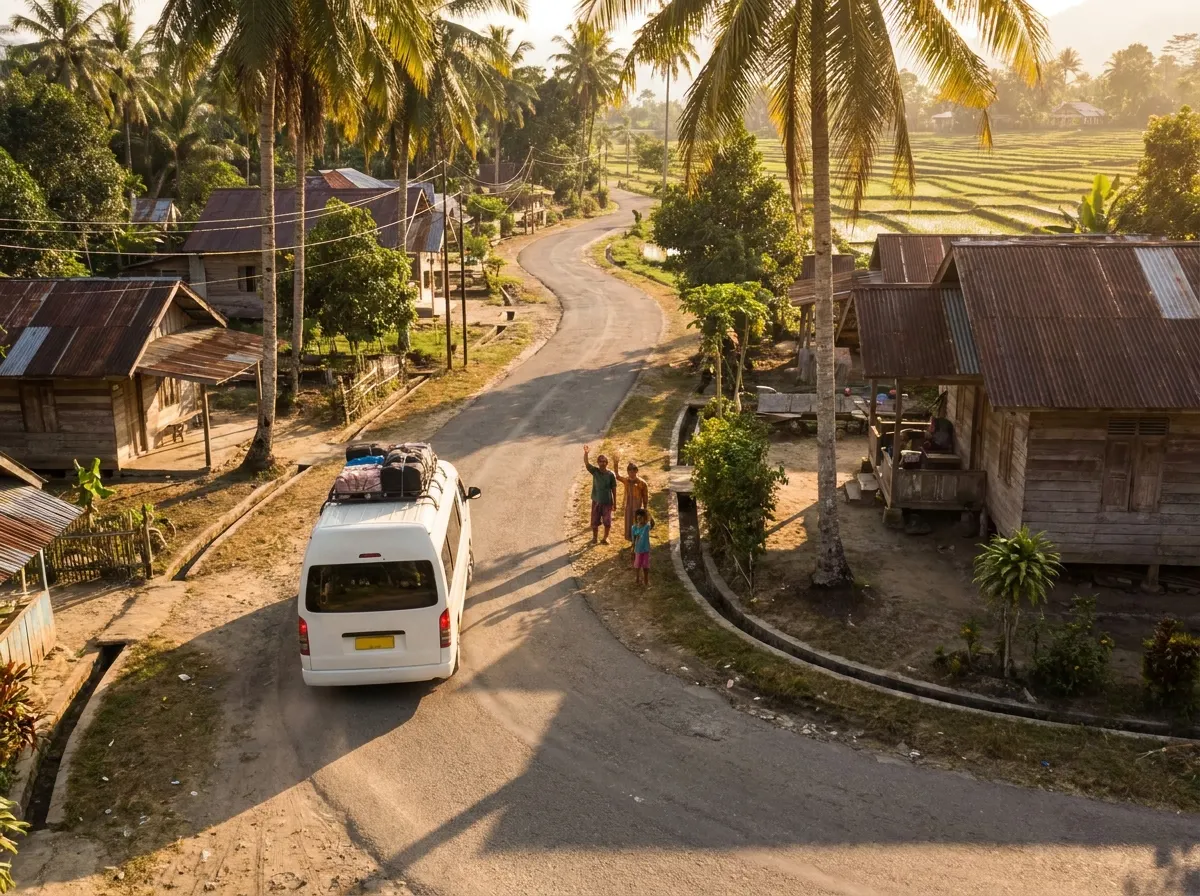
First-time visitors are often surprised to learn that Bukit Lawang’s riverside eco-lodge zone is entirely car-free! Cars and tourist shuttles stop at the main Bukit Lawang parking terminal/bridge, and a narrow paved pedestrian footpath (connected by scenic suspension bridges and short flights of steps) runs for 1.2 km along the Bohorok River.
- Can I Bring a Rolling Hard-Shell Suitcase to Bukit Lawang? Yes! You do not need to carry it yourself along the footpath. When your car arrives at the main parking terminal, friendly local porters or your eco-lodge staff will happily carry or wheel your heavy suitcase across the bridge right to your room door for a small tip of
IDR 20,000–30,000(€2).
4. Village Laundry Services: Cleaning Muddy Jungle Clothes After Your Trek
When you return from a 1-day or multi-day trek in Gunung Leuser, your trekking pants, t-shirts, and anti-leech socks will be soaked in rainforest sweat and red clay mud. Here is how village laundry (laundry kiloan) works in Bukit Lawang:
| Service Type | Turnaround Time | Standard Rate (EUR) | Approx. Benchmark (IDR) |
|---|---|---|---|
| Standard Wash, Dry & Fold (Next-Day) | 24 Hours (Drop off by 16:00, ready next afternoon) | €2 – €2 / kg | IDR 25,000 – 35,000 / kg |
| Express Post-Trek Laundry (Overnight / Same-Day) | 8–12 Hours (Drop off at 15:30 after tubing, ready by 07:30 AM shuttle) | €3 – €3 / kg | IDR 45,000 – 50,000 / kg |
| Muddy Trail Shoe Scrub & Stuff-Dry | Overnight | €2 / pair | IDR 35,000 / pair |
3 Insider Laundry Tips for Rainforest Travelers
- Why Hand-Washing in Your Bathroom Sink Rarely Works: Because nighttime relative humidity in the Bohorok valley sits at 85%–90%, thick cotton clothes washed in your sink and hung on a shaded balcony often stay damp for 36 hours. Village laundry shops use high-speed spin extractors and gas/heated tumble dryers or sunny rooftop lines so your clothes come back crisp, dry, and fragrant.
- Rinse Red Clay Off Your Socks Before Dropping Off Laundry: Give muddy leech socks a quick 30-second rinse under an outdoor tap before putting them into your laundry bag so red clay does not stain lighter shirts.
- Donating Gently Used Trekking Shoes or Leech Socks: If you bought local rubber Sepatu Getah or canvas anti-leech socks for your trek and do not need them for the rest of your trip, you can leave them with your HPI guide or camp porter—local junior trackers and village farmers always put them to great use!

Explore Bukit Lawang Team
HPI Member Guides, Wildlife Naturalists & Conservation CollectiveThe editorial and expedition team of Explore Bukit Lawang — local HPI member guides, primate trackers, river captains and conservation educators born along the Bohorok River.
Ready to Trek with Our Local HPI Guides?
National park permits, small private groups, and traditional river tubing included on every expedition.