What shoes to wear for Gunung Leuser jungle trekking? Compare trail runners, waterproof hiking boots & local studded rubber Sepatu Getah in Bukit Lawang.
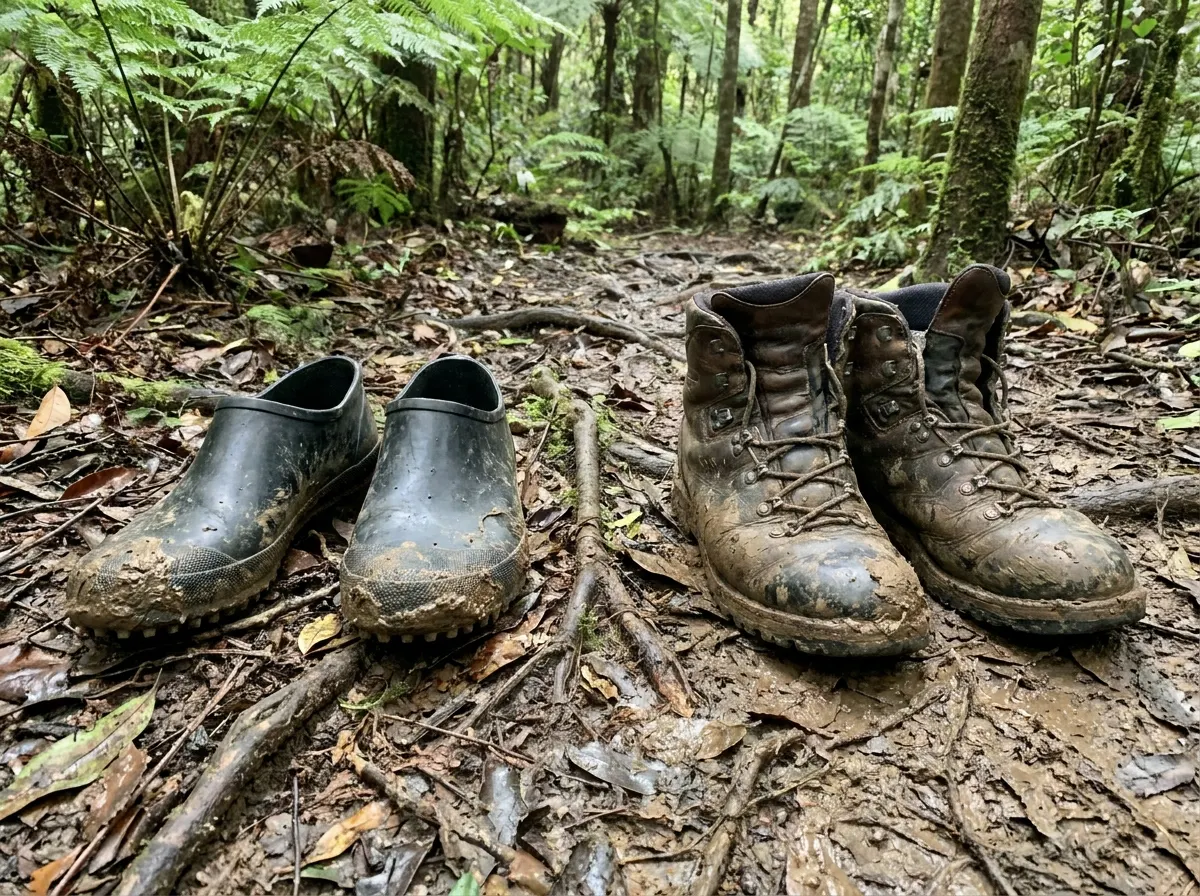
If you look down at the feet of your HPI member guide or jungle camp cook before stepping into Gunung Leuser National Park, you will notice something surprising. While international trekkers arrive wearing €200 Gore-Tex mountain boots or carbon-plated trail runners, almost every local Sumatran guide, tracker, and porter is wearing a pair of humble, €3–€5 white-or-black molded rubber soccer shoes known locally as Sepatu Getah (or "Adidas Kampung").
Choosing the right footwear for Bukit Lawang is not like choosing boots for the European Alps or the dry trails of Patagonia. In an equatorial lowland dipterocarp rainforest with 85%–95% humidity, slick red clay slopes, wet buttress tree roots, and ankle-deep stream crossings, traditional footwear wisdom turns upside down. This field guide compares lugged trail running shoes, waterproof hiking boots, and local rubber Sepatu Getah so your feet stay blister-free and firmly planted on the trail.
1. What the Gunung Leuser Trail Surface Actually Feels Like
As detailed in our Bukit Lawang Trail Difficulty & Elevation Guide, trekking in Gunung Leuser involves three distinct underfoot challenges:
- Compacted Wet Clay & Laterite Mud: Even during the drier months (May to September), canopy shade prevents morning dew and nocturnal rain showers from evaporating completely. Shallow lugs (like those on urban sneakers or flat-soled gym shoes) quickly pack with clay and turn into slick skis on 30-degree descents.
- Polished Tree Roots & Limestone Karst: Natural staircases of interlocking dipterocarp roots form the backbone of Bukit Lawang’s ridge climbs. Hard, stiff rubber compounds common on heavy alpine trekking boots can slide off wet roots unless the rubber compound is tacky and flexible.
- Stream Crossings & Riverside Camp Approaches: On any 2D1N Overnight Camp or 3D2N Jungle Expedition, you will wade across clear tributaries of the Landak or Bohorok Rivers before reaching camp.
2. Contender #1: Lugged Trail Running Shoes (Best All-Round Choice for Visitors)
For 80% of international trekkers visiting Bukit Lawang for a 1-day to 3-day trek, non-waterproof, breathable mesh trail running shoes with deep multi-directional lugs (4mm–6mm) are the single best footwear choice.
Why Trail Runners Excel in the Rainforest
- Rapid Water Drainage & Faster Drying: When you step into a jungle stream or walk through a warm tropical downpour, water enters any low-cut shoe—and immediately drains out through the engineered mesh ports with your next ten steps.
- Sticky Rubber Outsoles (Vibram Megagrip / Contagrip): Modern soft-compound trail outsoles conform to curved tree roots and shed red clay far better than rigid trekking boot soles.
- Lightweight Cushioned Midsoles: Saving 500 grams on your feet reduces hip flexor and knee fatigue when stepping up and over high buttress roots all afternoon.
What to Avoid: Never wear smooth-bottomed road running shoes (e.g., standard foam marathon trainers, Converse, or Vans) or Gore-Tex (GTX) lined trail runners. Once water tops the ankle collar of a GTX shoe, the waterproof membrane acts like a plastic bucket, trapping water inside around your toes for the rest of the trek.
3. Contender #2: Traditional Mid/High-Cut Hiking Boots (Pros & Rainforest Pitfalls)
Many travelers already own a broken-in pair of mid-cut leather or Gore-Tex hiking boots and wonder if they should bring them to Sumatra.
When Hiking Boots Make Sense
- Ankle Stability on Steep Descents: If you have a history of ankle sprains or are embarking on a multi-day 4D3N to 7D6N deep wilderness expedition carrying a heavier backpack, a high ankle collar provides valuable lateral support on off-camber roots.
- Protection Against Roots & Rocks: Thick toe caps and leather uppers shield your feet from stubbing against submerged river stones or thorny rattan vines.
The Rainforest Pitfall of Waterproof Boots
In 90% relative humidity, wet leather or Gore-Tex boots will not dry overnight at a riverside jungle camp. If you wear waterproof boots, ask your HPI guide to help you rock-hop dry across stream crossings, wear tall canvas anti-leech socks tucked securely over your ankles, and pack a dedicated pair of dry merino or synthetic hiking socks sealed inside a Ziploc bag for Day 2.
4. Contender #3: Local Studded Rubber "Sepatu Getah" (The HPI Guide Secret Weapon)
Walk into any village provision shop (warung kelontong) in Bukit Lawang or the Gotong Royong Friday Market and you will see stacks of injection-molded rubber shoes with built-in soccer cleats selling for €3 to €5 (IDR 50,000–85,000).
Why Every Sumatran Guide Swears by Sepatu Getah
- Pure Natural Sumatran Rubber Traction: Molded from soft, vulcanized natural latex harvested from the very rubber estates surrounding Bukit Lawang, the flexible sole bends around wet roots like a gecko’s foot while the 12 conical rubber studs bite into slick red clay.
- Instant 10-Second Drying: Because the entire shoe is seamless molded rubber with zero fabric sponge or foam lining, you can wade straight through a river, shake the water out, wipe the inside with a leaf or towel, and have dry shoes in 10 seconds.
- Zero Fear of Mud Destruction: You do not have to ruin your expensive €180 travel sneakers in jungle clay just before boarding your flight home from Medan Airport (KNO).
Should Visitors Trek in Sepatu Getah? (And the 2 Mandatory Hacks!)
Yes—with two important caveats! Because Sepatu Getah cost only €4, they have zero arch support, zero heel cushioning, and Only Come in Sizes EU 36 to EU 44/45 (US Men’s 11 max). If you want to trek in local rubber shoes like a pro, follow these two local guide hacks:
- Hack #1 — Insert Your Own Foam Insole: Pull the removable EVA or gel insole out of your normal running shoes and slide it inside the Sepatu Getah. This instantly adds arch support and shock absorption!
- Hack #2 — Always Wear Thick Crew Socks (+ Leech Socks): Never wear rubber shoes barefoot—wet rubber against bare skin causes friction blisters within 45 minutes. Wear a thick cushioned sports sock underneath your anti-leech socks.
5. Head-to-Head Comparison: Which Jungle Footwear Should You Choose?
| Footwear Type | Mud & Wet Root Grip | Drying Speed | Cushion & Arch Support | Standard Rate (EUR) | Approx. Benchmark (IDR) |
|---|---|---|---|---|---|
| Lugged Trail Runners (Non-GTX Mesh) | ⭐⭐⭐⭐⭐ Excellent | Fast (2–4 hrs) | ⭐⭐⭐⭐⭐ High | €120+ (Bring own) | IDR 2,000,000+ |
| Local Rubber Sepatu Getah (+ Insole) | ⭐⭐⭐⭐⭐ Exceptional | Instant (10 secs) | ⭐⭐⭐ Moderate (with insole) | €4 in village | IDR 65,000 |
| Mid/High Waterproof Hiking Boots | ⭐⭐⭐⭐ Good | Very Slow (24–48 hrs) | ⭐⭐⭐⭐⭐ High + Ankle Lock | €160+ (Bring own) | IDR 2,700,000+ |
| Flat Road Sneakers / Skate Shoes | ⭐ Poor (Slippery) | Moderate | ⭐⭐⭐ Moderate | Not Recommended | Buy Sepatu Getah instead |
6. Don’t Forget Camp Sandals & Blister Prevention
No matter which primary trekking shoe you choose, every overnight trekker (2D1N or longer) needs a second lightweight pair of footwear (200g–300g) clipped to or packed inside their daypack:
- Evening Riverside Camp Airing: As soon as you arrive at your riverside jungle camp around 15:30 WIB, taking off your damp shoes and socks to let your feet breathe in open sandals prevents maceration ("warm-water immersion foot") and fungal irritation.
- Bohorok River Tube Rafting Return: On the final afternoon, your muddy trekking shoes get sealed inside your guide’s waterproof dry-barrel while you wear strap-on water sandals (e.g., Teva/Chaco/Keen) or flip-flops on the Bohorok River Tube Rafting ("Jungle Taxi") ride back to your guesthouse.
- Hydrocolloid Blister Plasters: Damp skin softens rapidly in 85% humidity. Pack 3–4 Compeed or hydrocolloid blister bandages in your personal kit and check our Jungle First-Aid & Medical Guide for hot-spot care.

Explore Bukit Lawang Team
HPI Member Guides, Wildlife Naturalists & Conservation CollectiveThe editorial and expedition team of Explore Bukit Lawang — local HPI member guides, primate trackers, river captains and conservation educators born along the Bohorok River.
Ready to Trek with Our Local HPI Guides?
National park permits, small private groups, and traditional river tubing included on every expedition.