Trail & River Advisory
Bukit Lawang Village Zones: Which Riverside Area to Stay In
Click to enlarge

Bukit Lawang is not a typical highway town where hotels line a busy street. Built along a dramatic gorge where the turquoise waters of the Bohorok River tumble out of Gunung Leuser National Park, the entire accommodation sector of the village is strung out along a 1.5-kilometer, car-free pedestrian river promenade connected by iconic wooden and steel suspension bridges.

Because vehicles must park at the village entrance, your choice of accommodation dictates how far you walk, how close you are to the national park gates, how quiet your nights will be, and how easy it is to reach local fruit markets or ATMs. This field guide breaks down the three distinct village zones, expected room amenities (hot water, AC vs ceiling fans, mosquito nets), and practical tips for booking your stay.

€
Guide rates in this article are displayed in: EUR (€) Automatically converted from standard HPI Langkat reference tariffs (Base: EUR).
Switch currency in top header

1. Understanding Bukit Lawang’s Car-Free Riverside Geography

Before selecting a guesthouse or eco-lodge, it helps to understand how Bukit Lawang is structured from east (downstream) to west (upstream toward the rainforest):

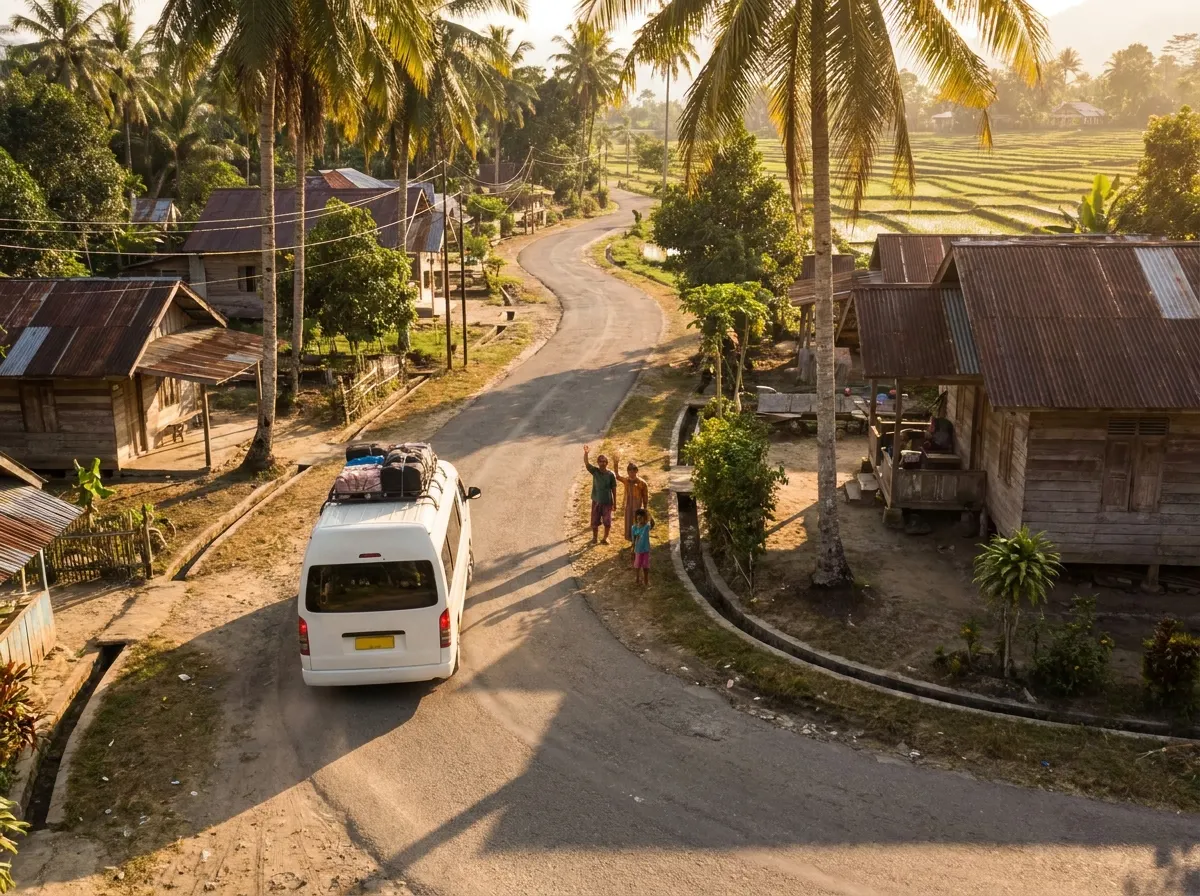
  • The Main Parking Bridge & Terminal (Downstream / East): All private transfer cars, shared tourist shuttles from Medan Airport (KNO), and local buses terminate at the main parking area in Gotong Royong / lower village. Beyond this point, no passenger cars or vans can enter.
  • The Riverside Footpath: A paved walking path follows the south bank of the Bohorok River. Multiple scenic suspension bridges (jembatan gantung) link the south bank to quiet riverside lodges nestled against the jungle hills on the north bank.
  • Luggage Assistance: If you are carrying a large backpack or rolling suitcase, local porters and hotel staff wait near the bridge to assist with transport to your lodge for a small tip of €2 (IDR 20,000–30,000). See our Luggage Storage & Laundry Guide.
Explore Accommodations on the Map: Open our Interactive Bukit Lawang Pinned Map to locate suspension bridges, eco-lodges, riverside warungs, and walking paths.

2. The 3 Village Accommodation Zones Compared

Lodging in Bukit Lawang falls into three main geographical zones, each with its own character, noise level, and proximity to nature:

Village Zone Distance from Parking Atmosphere & Noise Standard Rate (EUR) Best Suited For
Zone 1: Upper River & Park Edge 15–25 min walk (1.0–1.4 km) Deep jungle calm; rushing river sound; zero motorbike traffic €25 – €65 / night Nature lovers, couples, photographers, closest to park gates
Zone 2: Central Promenade & Bridges 5–12 min walk (400–800 m) Vibrant social hub; riverside cafes; occasional acoustic live music €15 – €45 / night Solo travelers, families, active swimmers, social backpackers
Zone 3: Lower Village & Terminal 1–4 min walk (50–300 m) Bustling rural village; closer to road; budget homestays €8 – €20 / night Late arrivals, budget backpackers, closest to markets & ATMs

Zone 1: Upper Bohorok River & National Park Edge

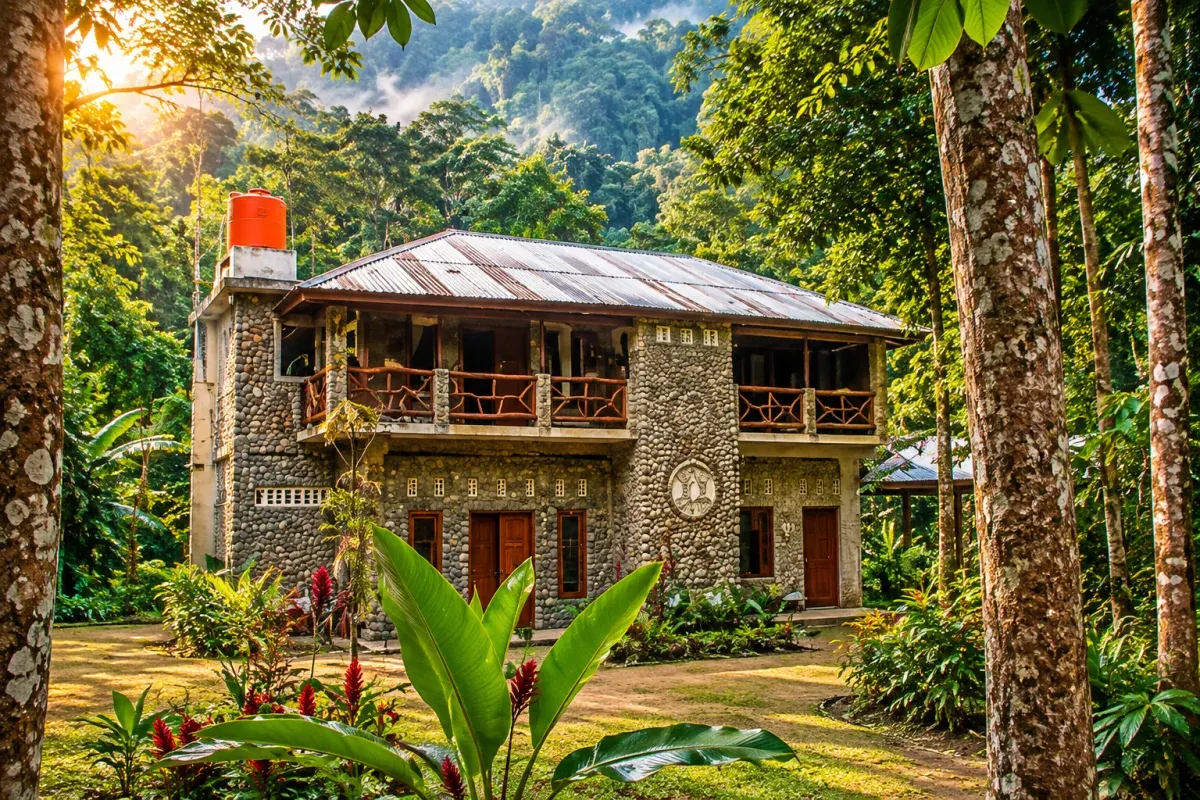
Situated at the very end of the walking path directly adjacent to the Gunung Leuser National Park boundary checkpoint, this zone is where the forest canopy leans over the water. Properties here offer stunning limestone cliff views, private garden terraces, and lush jungle ambiance. You fall asleep to the roaring Bohorok River rapids and wake up to the dawn calls of wild gibbons and Thomas Leaf Monkeys foraging in the trees above your balcony. It requires a 15-to-20-minute walk from the parking area, but most travelers consider the tranquility well worth the stroll.

Zone 2: Central Riverside Promenade & Bridges

The heart of Bukit Lawang’s ecotourism community. Strung along both banks between the suspension bridges, this zone features popular eco-lodges, riverside open-air restaurants, and calm natural river pools where travelers gather to swim in the afternoon. Dining options are plentiful, offering fresh local Sumatran curries, vegetarian feasts (Food & Dietary Guide), and cold fresh juices. It strikes the perfect balance between convenient access and scenic riverside beauty.

Zone 3: Lower Village & Bridge Entrance (Gotong Royong)

Located near the main road and public bus stop. While less secluded than the upper zones, staying here is convenient if you arrive late at night or have an early 07:00 departure. It is also the closest area to the local grocery shops, fruit stalls, and the Friday traditional market (Pekan Gotong Royong), with the nearest ATM approximately 1.8 km down the paved road.

3. Room Amenities & What to Expect in Rainforest Lodges

Bukit Lawang’s accommodations range from rustic bamboo river huts to stylish boutique eco-villas. Here is what to anticipate regarding standard amenities:

  • Air Conditioning vs Ceiling Fans: The majority of eco-lodges do not have air conditioning, and you rarely miss it. The combination of dense forest shade, cool mountain river currents, and ceiling fans keeps nighttime temperatures around 22°C to 24°C. However, some premium rooms now offer AC for travelers who prefer climate control.
  • Hot Water Showers: Basic budget rooms offer traditional gravity-fed cold freshwater showers (refreshing after a humid trek), while mid-range and boutique lodges feature solar or gas-heated hot water. If a hot shower is essential for you, confirm with your lodge when booking.
  • Mosquito Netting: Most rooms provide mosquito nets over beds. While mosquito density along the rushing river is relatively low compared to stagnant swamps, nets provide peace of mind and keep nocturnal forest insects away from your sleeping space.
  • Wi-Fi & Electricity: Fiber-optic internet (Telkom IndiHome) is installed in most lodges, offering 10–30 Mbps speeds in common dining areas. Brief power outages can occur during heavy mountain storms, but cellular data on the Telkomsel 4G network remains reliable.

4. Critical Balcony Etiquette: The Primate Rule

Because Bukit Lawang borders a rich primate habitat, wild long-tailed macaques (kera) frequently patrol the roofs and tree branches along the river in the early morning and late afternoon:

  1. Never Leave Food on Your Balcony: Even a wrapped pack of biscuits, a bag of fruit, or a sugary drink left on an outdoor table will be quickly spotted by curious monkeys.
  2. Keep Balcony Doors and Windows Latched When Away: Always close and latch your balcony doors when heading out for breakfast or starting your jungle trek. Macaques are adept at sliding open unlatched screen doors!
  3. Never Feed Primates from Your Room: Feeding monkeys creates habituated nuisance behavior and disrupts natural foraging. Respect the national park’s ethical wildlife observation principles.

Planning Your Trek & Stay Together: Need help choosing the best eco-lodge for your travel style? Read our guide on How Many Days to Spend in Bukit Lawang, build your complete custom itinerary with our Custom Trip Builder, or contact our local team for personalized lodge recommendations!
Share This Guide With Your Travel Partner Planning a Sumatra expedition together?
WhatsApp Facebook X Telegram Email
Explore Bukit Lawang Team
Verified Guide & Author • 15+ Years in Leuser

Explore Bukit Lawang Team

HPI Member Guides, Wildlife Naturalists & Conservation Collective

The editorial and expedition team of Explore Bukit Lawang — local HPI member guides, primate trackers, river captains and conservation educators born along the Bohorok River.

Experience Gunung Leuser In Person

Ready to Trek with Our Local HPI Guides?

National park permits, small private groups, and traditional river tubing included on every expedition.
Travel Advice & Logistics • 9 min read • 11 views • November 15, 2026
Bukit Lawang Village Zones: Which Riverside Area to Stay In

Where to stay in Bukit Lawang? Compare Upper vs Lower Bohorok River accommodation zones, quiet jungle lodges, suspension bridge access & village amenities.

Explore Bukit Lawang Team
Explore Bukit Lawang Team HPI Member Guides, Wildlife Naturalists & Conservation Collective

Bukit Lawang is not a typical highway town where hotels line a busy street. Built along a dramatic gorge where the turquoise waters of the Bohorok River tumble out of Gunung Leuser National Park, the entire accommodation sector of the village is strung out along a 1.5-kilometer, car-free pedestrian river promenade connected by iconic wooden and steel suspension bridges.

Because vehicles must park at the village entrance, your choice of accommodation dictates how far you walk, how close you are to the national park gates, how quiet your nights will be, and how easy it is to reach local fruit markets or ATMs. This field guide breaks down the three distinct village zones, expected room amenities (hot water, AC vs ceiling fans, mosquito nets), and practical tips for booking your stay.

€
Guide rates in this article are displayed in: EUR (€) Automatically converted from standard HPI Langkat reference tariffs (Base: EUR).
Switch currency in top header

1. Understanding Bukit Lawang’s Car-Free Riverside Geography

Before selecting a guesthouse or eco-lodge, it helps to understand how Bukit Lawang is structured from east (downstream) to west (upstream toward the rainforest):

  • The Main Parking Bridge & Terminal (Downstream / East): All private transfer cars, shared tourist shuttles from Medan Airport (KNO), and local buses terminate at the main parking area in Gotong Royong / lower village. Beyond this point, no passenger cars or vans can enter.
  • The Riverside Footpath: A paved walking path follows the south bank of the Bohorok River. Multiple scenic suspension bridges (jembatan gantung) link the south bank to quiet riverside lodges nestled against the jungle hills on the north bank.
  • Luggage Assistance: If you are carrying a large backpack or rolling suitcase, local porters and hotel staff wait near the bridge to assist with transport to your lodge for a small tip of €2 (IDR 20,000–30,000). See our Luggage Storage & Laundry Guide.
Explore Accommodations on the Map: Open our Interactive Bukit Lawang Pinned Map to locate suspension bridges, eco-lodges, riverside warungs, and walking paths.

2. The 3 Village Accommodation Zones Compared

Lodging in Bukit Lawang falls into three main geographical zones, each with its own character, noise level, and proximity to nature:

Village Zone Distance from Parking Atmosphere & Noise Standard Rate (EUR) Best Suited For
Zone 1: Upper River & Park Edge 15–25 min walk (1.0–1.4 km) Deep jungle calm; rushing river sound; zero motorbike traffic €25 – €65 / night Nature lovers, couples, photographers, closest to park gates
Zone 2: Central Promenade & Bridges 5–12 min walk (400–800 m) Vibrant social hub; riverside cafes; occasional acoustic live music €15 – €45 / night Solo travelers, families, active swimmers, social backpackers
Zone 3: Lower Village & Terminal 1–4 min walk (50–300 m) Bustling rural village; closer to road; budget homestays €8 – €20 / night Late arrivals, budget backpackers, closest to markets & ATMs

Zone 1: Upper Bohorok River & National Park Edge

Situated at the very end of the walking path directly adjacent to the Gunung Leuser National Park boundary checkpoint, this zone is where the forest canopy leans over the water. Properties here offer stunning limestone cliff views, private garden terraces, and lush jungle ambiance. You fall asleep to the roaring Bohorok River rapids and wake up to the dawn calls of wild gibbons and Thomas Leaf Monkeys foraging in the trees above your balcony. It requires a 15-to-20-minute walk from the parking area, but most travelers consider the tranquility well worth the stroll.

Zone 2: Central Riverside Promenade & Bridges

The heart of Bukit Lawang’s ecotourism community. Strung along both banks between the suspension bridges, this zone features popular eco-lodges, riverside open-air restaurants, and calm natural river pools where travelers gather to swim in the afternoon. Dining options are plentiful, offering fresh local Sumatran curries, vegetarian feasts (Food & Dietary Guide), and cold fresh juices. It strikes the perfect balance between convenient access and scenic riverside beauty.

Zone 3: Lower Village & Bridge Entrance (Gotong Royong)

Located near the main road and public bus stop. While less secluded than the upper zones, staying here is convenient if you arrive late at night or have an early 07:00 departure. It is also the closest area to the local grocery shops, fruit stalls, and the Friday traditional market (Pekan Gotong Royong), with the nearest ATM approximately 1.8 km down the paved road.

3. Room Amenities & What to Expect in Rainforest Lodges

Bukit Lawang’s accommodations range from rustic bamboo river huts to stylish boutique eco-villas. Here is what to anticipate regarding standard amenities:

  • Air Conditioning vs Ceiling Fans: The majority of eco-lodges do not have air conditioning, and you rarely miss it. The combination of dense forest shade, cool mountain river currents, and ceiling fans keeps nighttime temperatures around 22°C to 24°C. However, some premium rooms now offer AC for travelers who prefer climate control.
  • Hot Water Showers: Basic budget rooms offer traditional gravity-fed cold freshwater showers (refreshing after a humid trek), while mid-range and boutique lodges feature solar or gas-heated hot water. If a hot shower is essential for you, confirm with your lodge when booking.
  • Mosquito Netting: Most rooms provide mosquito nets over beds. While mosquito density along the rushing river is relatively low compared to stagnant swamps, nets provide peace of mind and keep nocturnal forest insects away from your sleeping space.
  • Wi-Fi & Electricity: Fiber-optic internet (Telkom IndiHome) is installed in most lodges, offering 10–30 Mbps speeds in common dining areas. Brief power outages can occur during heavy mountain storms, but cellular data on the Telkomsel 4G network remains reliable.

4. Critical Balcony Etiquette: The Primate Rule

Because Bukit Lawang borders a rich primate habitat, wild long-tailed macaques (kera) frequently patrol the roofs and tree branches along the river in the early morning and late afternoon:

  1. Never Leave Food on Your Balcony: Even a wrapped pack of biscuits, a bag of fruit, or a sugary drink left on an outdoor table will be quickly spotted by curious monkeys.
  2. Keep Balcony Doors and Windows Latched When Away: Always close and latch your balcony doors when heading out for breakfast or starting your jungle trek. Macaques are adept at sliding open unlatched screen doors!
  3. Never Feed Primates from Your Room: Feeding monkeys creates habituated nuisance behavior and disrupts natural foraging. Respect the national park’s ethical wildlife observation principles.
Planning Your Trek & Stay Together: Need help choosing the best eco-lodge for your travel style? Read our guide on How Many Days to Spend in Bukit Lawang, build your complete custom itinerary with our Custom Trip Builder, or contact our local team for personalized lodge recommendations!
You have reached the end of this field dispatch

Written by local HPI member guides from Bukit Lawang. If you have questions about packing, permits, or trail conditions, reach out anytime.

Chat with Guide on WhatsApp

Park Permit Assistance

Facilitated at Balai Besar TNGL checkpoints

Ethical Jungle Trekking

Zero feeding & 10m distance policy

Traditional River Tubing

Safety gear & skilled river captains

Works Fully Offline

Guides work deep inside rainforest